This is part of a regular series of MJBizDaily interviews with major THC industry players. To be considered for an interview, contact editorial@mjbizdaily.com.
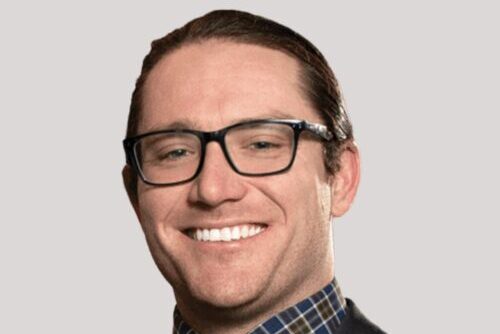
John Cartier was preparing for the first meeting of the Omaha Tribe of Nebraska’s new cannabis commission one morning last November when his phone rang.
It was the state attorney general’s office, with whom the tribe had been negotiating a trade deal to allow tobacco sales on the reservation since the prior summer.
And they were calling Cartier, the tribe’s attorney general, with a threat.

Why are Native tribes legalizing cannabis?
Around the same time as what Cartier characterized as “very friendly” tobacco talks first began in July 2025, the Omaha Tribe voted to become the latest tribal nation to legalize adult-use cannabis on its reservation.
Tribes across the country have moved forward with legalizing cannabis in their jurisdictions – which are sovereign property under federal law – sometimes without waiting for the state government to make the first move.
For the Omaha, with unemployment hovering at 60% on the reservation, and labor-intensive cannabis cultivation and sales a ready source of local jobs, legalization was partially borne out of economic necessity.
And with hard drugs like methamphetamine “a scourge” on the reservation, and tribal tradition accepting of plant medicine, there was limited resistance.
“Cannabis can help alleviate some of those issues, to be frank,” Cartier said.
Why is Nebraska medical cannabis moving so slowly?
But the Omaha’s bold move was also a direct response to the state government in Lincoln’s lack of progress on medical cannabis access.
Even after more than 70% of voters legalized MMJ the previous November, there’s been little to no movement, even as other states like South Dakota and Missouri opened industries, Cartier said in a recent interview with MJBizDaily.
“All these other states have since moved forward with a medical or an adult-use system,” he said.
“And we’re still stuck, even after passing the ballot initiative.”
But the Omaha had also moved past the state by legalizing cannabis for all “adults 21 and over, including non-Tribal visitors,” as the tribe said in a press release announcing the vote.
And all of that was much too far for Nebraska Attorney General Mike Hilgers.
Nebraska AG’s ‘main job is to stop the spread of cannabis’
Calling on the phone that November day was one of Hilgers’ deputies, Cartier said.
She was apologetic, but she explained that because the Omaha Tribe was moving forward with legal and regulated cannabis access, the state would not be offering a tobacco compact after all.
Taken off guard, Cartier dialed Hilgers directly. And Hilgers did not mince words.
“He said that his main job is to stop the spread of cannabis in the state of Nebraska,” Cartier told MJBizDaily. “That was really shocking and disappointing to hear.
“These officials will do whatever they can to stonewall us.”
But if Hilgers meant to sow doubt or hesitation by attacking the Omaha Tribe’s economy, the gambit backfired.
The Omaha Tribe is still moving forward “as fast as we can,” Cartier said. “Having the audacity to say what we’re going to be selling is poison has really gotten us fired up.”
Is tribal cannabis legal even if the state says no?
That said, he acknowledged there could be serious consequences.
Cartier is still waiting for clear direction from federal partners, such as the U.S. Department of the Interior, which funds schools, healthcare and other key services on the reservation through the Bureau of Indian Affairs.
“Are they going to come after us?” Cartier wants to know.
Even if they do, there’s a feeling that “we need to pursue this anyways,” he said.
“And if they’re going to try and punish us – wow. I know the public’s going to hate that, for one.
“Maybe that’s the spark that’s going to change representation in this state.”
The most hostile state to cannabis in the US?
The list of states without cannabis access shrinks every year. The few remaining holdouts are notable for their hard-line stances. But Nebraska has distinguished itself.
More than a decade ago, Nebraska was one of two states to attempt to convince the U.S. Supreme Court to invalidate Colorado’s adult-use cannabis legalization. (SCOTUS wasn’t interested, and the case died.)
More recently, state officials fought the 2024 medical cannabis legalization push both on the political campaign trail and in the courts.
Last fall, Pillen refused to sign off on rules around permitting medical cannabis cultivators without a plant-count limit that critics say is so low it jeopardizes a grow’s economic viability.
When will Nebraska medical marijuana sales start?
One of the state’s four licensed cultivators recently said the first harvest could be in October at the earliest. But there are still no manufacturers or extractors licensed – and only processed products will be available in Nebraska, with both cannabis flower and extracts that can be vaporized banned.
And at the best, most recent estimate, the first state-legal medical cannabis sale could come in 2027 – more than two years after MMJ legalization.
Discouragement is also coming from Washington. Earlier this year, Nebraska was mysteriously left off a list of states where the federal Justice Department is forbidden to meddle with state-legal cannabis operations.
Republican U.S. Sen. Pete Ricketts, who was governor when Nebraska tried to take Colorado cannabis to court, denied involvement, but Cartier doesn’t buy it.
“I don’t have any proof, but we’re not stupid,” he said.
Subscribe to the MJBiz Factbook
Exclusive industry data and analysis to help you make informed business decisions and avoid costly missteps. All the facts, none of the hype.
What you will get:
- Monthly and quarterly updates, with new data & insights
- Financial forecasts + capital investment trends
- State-by-state guide to regulations, taxes & market opportunities
- Annual survey of cannabis businesses
- Consumer insights
- And more!
Tribal cannabis business opportunities in Nebraska
But a hostile political climate in Lincoln and Washington doesn’t change the situation for the Omaha’s sovereignty.
“We as a reservation can absolutely regulate cannabis now and sell it,” he said. “It doesn’t violate state statute at all.”
On top of a local government that wants a cannabis operation to succeed, tribal cannabis has another advantage: immunity from Internal Revenue Code Section 280E, regardless of whether President Donald Trump’s marijuana rescheduling executive order is ever fulfilled.
“My initial impression is” that 280E doesn’t apply to tribal cannabis, Cartier said. “That’s really powerful.”
In the meantime, the Omaha may be positioned to be market leaders when and if the Nebraska’s state-regulated cannabis industry finally launches.
Earlier this month, the tribe issued a request for proposals for outside entities with capital and expertise to help start its vertically integrated operation. The tribe plans to open a testing lab as well as cultivation and retail. The way things are going, the lab could be the first in the state – or the only.
Either way, “we have the first-mover advantage,” Cartier said.
“And we could have that for well over five years.”
Chris Roberts can be reached at chris.roberts@mjbizdaily.com.