
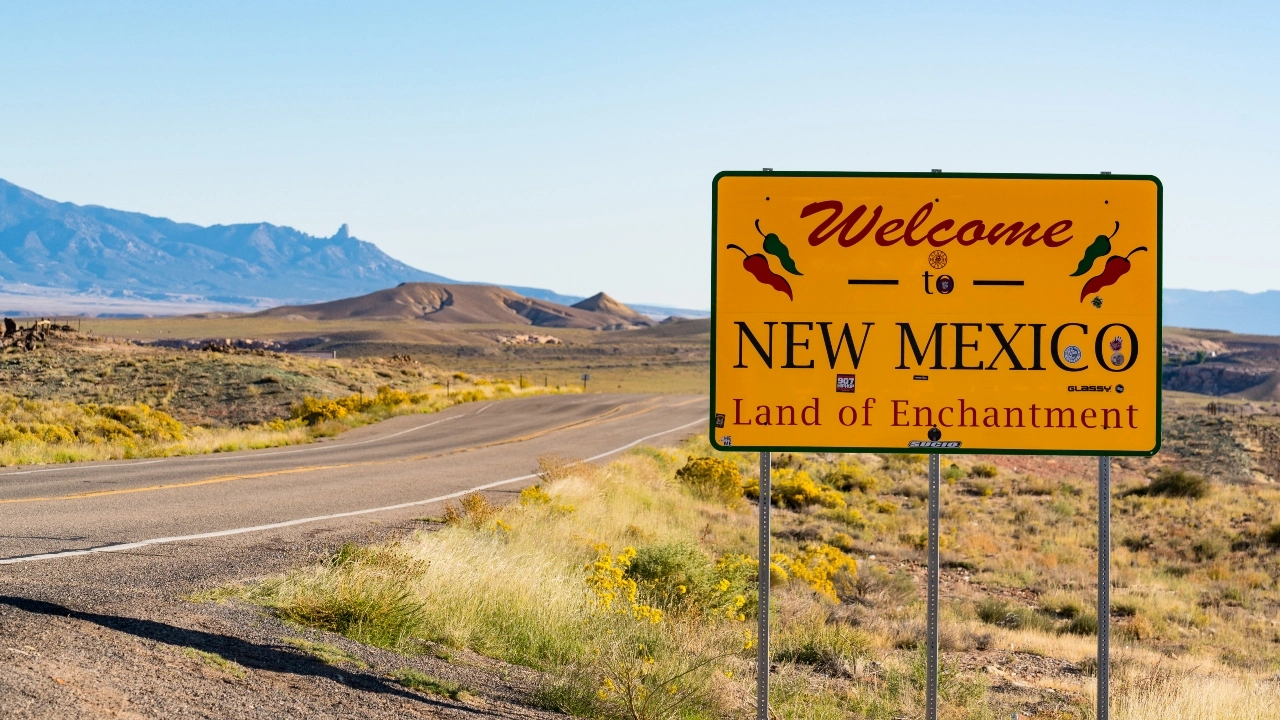
New Mexico is an oft-overlooked state, but the Land of Enchantment has a robust cannabis program that rivals that of neighboring Colorado or Nevada.
At a time when states like Massachusetts are eyeing legalization rollbacks and federal changes are uncertain, New Mexico’s cannabis market is growing. It’s not flashy or headline-grabbing; it’s a steady climb to statewide success.
Low license cost and the comparative ease of obtaining an integrated business license mean that New Mexico’s market has flourished since 2022 – almost entirely under the radar.
New Mexico has one of the highest dispensary densities per capita, with 47 retail outlets per 100,000 residents. In January, the state recorded over $35 million in adult-use sales and has reported over $1.6 billion since the program opened four years ago.

The New Mexico cannabis consumer is small but mighty. As of April, tax revenue from cannabis sales topped $205 million. Not bad for a state with just over 2.1 million people.
What sets New Mexico’s cannabis market apart?
What makes the New Mexico market unique is a combination of low cost of entry – annual license fees are just $2,500 – open licensing and a generally friendly attitude toward cannabis throughout the state.
Several of the largest cannabis companies in the country have no established presence in New Mexico. As a result, the market is dominated by small businesses and local cultivators, often under the same roof.
“New Mexicans, both consumers and operators, may view multistate operators as direct threats to the economic success of local residents who have risked financial stability to enter the cannabis space,” Sabrina Aragon, COO of High Desert Relief (HDR) told MJBizDaily.
Most of what New Mexicans consume is grown and sold by small, locally owned businesses. There are 10 types of licenses, and at last report from the New Mexico Cannabis Control Division, there were over 3,000 licenses, a third of which are dispensaries. Over 700 are integrated licenses that allow business owners to touch multiple parts of the supply chain.
“The New Mexico market offers a unique sense of pride and culture displayed through the people, products and tenacity. New Mexicans are proud to be from New Mexico,” Aragon said.
High Desert Relief was among the original 15 medical licenses and has served New Mexicans since 2010, with six locations around the state.
“Multistate operations may not see the New Mexico market as a state with the same economic opportunities to thrive as they would in more tourist-focused markets,” Aragon said.
What is the play for national cannabis brands?
But there is still opportunity here for national brands and big names – with the right positioning. Khalifa Kush is one of those brands.
Given the size of the New Mexico market versus the global reach of Khalifa Kush, why did the brand launch in New Mexico just over a year ago?
“Khalifa Kush thrives in emerging markets,” CEO DJ Saul told MJBizDaily. “Wiz (Khalifa) is very popular across the Southwest, and we’re intentionally priced to be one of the more affordable premium brands on the shelf. It’s a perfect recipe for success.”
Part of Khalifa Kush’s success is the love and reputation of the man himself. But the other part of it is selective rollout, with the brand available exclusively through Urban Wellness, a dispensary with 13 locations, mainly in the Albuquerque area. Like many dispensaries, Urban Wellness also offers its own in-house line of flower and cannabis products.
What is the cannabis culture like in New Mexico?
Cannabis culture has a stronghold in New Mexico, something that brands can use to their advantage.
“New Mexico has experienced consumers,” Saul said. “They’re very savvy with their selection, and it’s the perfect market to get product feedback.”
That is why Khalifa Kush has New Mexico-specific product drops planned this year, with new SKUs and limited-edition product lines set to launch in 2026 and beyond.
Aragon agrees – and it goes deeper than cannabis.
“New Mexicans tend to gravitate toward supporting locally owned and locally rooted brands, regardless of the industry,” she said. “The cannabis industry is supported primarily by residents, most of whom want to champion the entrepreneurship of their families and neighbors.”
What opportunities does cannabis tourism offer?
With neighboring Texas still a prohibition state and legislators attempting to roll back hemp availability, New Mexico is well-positioned to serve the market.
Proximity to border towns and high-tourism areas is a big factor for brands.
“New Mexico has seen the border towns closest to Texas expand rapidly, with cannabis brands looking to cater to tourism,” Aragon said.
HDR, which has locations in Albuquerque and Santa Fe, is exploring options for a new Hobbs location, with no desire to look outside the state.
“Our expansion goals center on providing safe access to anticipated cannabis-tourism visiting New Mexico from neighboring states,” Aragon said.
What role does creativity play in New Mexico’s cannabis market?
Another, less commonly measured marker for success in the cannabis industry is the level of innovation. New Mexico’s cannabis laws are written in such a way that dispensaries are incentivized to grow their own cannabis and capture more of the supply chain, something that is typically tricky and expensive to do in other states.
Steve Weiner is the owner of Bighorn Cannabis Lounge & Dispensary, a dispensary that also serves as Taos’s only consumption lounge. In addition to retail sales and on-site consumption, Big Horn holds a manufacturing license.
“We produce in-house pre-rolls and precisely dosed beverage infusions with locally sourced New Mexico seltzers and kombucha, as well as traditional glass bottle Coca-Cola, Sprite and Fanta, all served legally in our lounge,” Weiner told MJBizDaily.
“We may be the only licensed operator infusing Coca-Cola products with cannabis on site for consumer purchase, which shows how New Mexico’s framework can enable true hospitality innovation.”
While public consumption was not formally legalized in New Mexico like in New York, that hasn’t stopped the state from welcoming cannabis businesses.
Big Horn offers Dungeons and Dragons gatherings in Taos, while art galleries in Santa Fe embrace sound-bath and weed events, and Puff N Paint events pop up in Albuquerque.
How do operators define a successful market?
Despite the lack of fanfare around the market or national interest, New Mexico’s cannabis market remains steady, with most months posting between $30 million and $40 million of cannabis sales, indicating strong consumer interest.
Like many established states, prices have dropped a bit since sales first launched in 2022. In April, the average sale was around $50. Today, nearly three years later, it’s around $38.
Despite this, consumer sales have remained steady and strong and businesses across the state embrace weed-friendly events.
Subscribe to the MJBiz Factbook
Exclusive industry data and analysis to help you make informed business decisions and avoid costly missteps. All the facts, none of the hype.
What you will get:
- Monthly and quarterly updates, with new data & insights
- Financial forecasts + capital investment trends
- State-by-state guide to regulations, taxes & market opportunities
- Annual survey of cannabis businesses
- Consumer insights
- And more!
“For HDR, alongside many brands across New Mexico, the conversation around expansion plans continues to focus on location visibility, location convenience or menu pricing when working toward measurable success,” Aragon said.
Weiner agrees.
“The New Mexico cannabis market rewards operators who understand culture, compliance and community depth – precision and authenticity matter more here than national scale.”
For feedback on this story, e-mail editorial@mjbizdaily.com.