This is part of a regular series of MJBizDaily interviews with major THC industry players. To be considered for an interview, contact editorial@mjbizdaily.com.
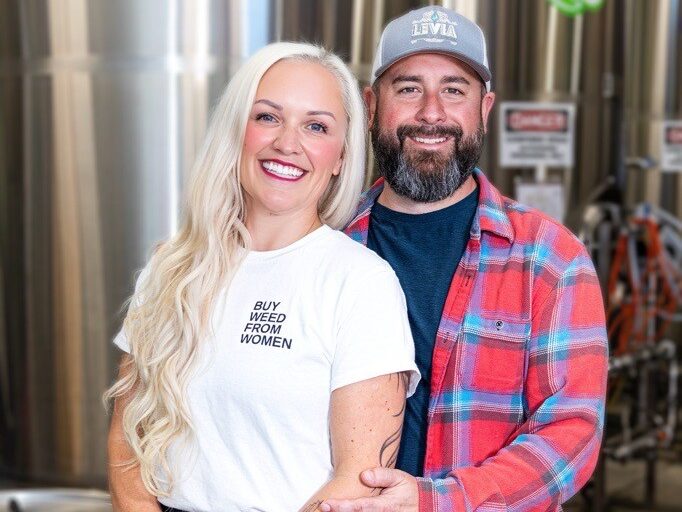
When Eric and Kristin Rogers sold Levia, the Massachusetts-based cannabis beverage brand they founded and spent years building, they believed they were also buying something: the scale, capital and reach of a marijuana multistate operator.
What they got instead was a lesson in how fast the cannabis industry can shift.
“MSOs were promising us the expansion we were hoping to accomplish,” Levia co-founder and President Eric Rogers told MJBizDaily in a recent interview. “They had real estate. They had cash.”

In September 2021, with valuations still soaring across the industry, New York-based MSO Ayr Wellness paid $20 million for Levia. The deal included up to $10 million in cash with the remainder in stock, Ayr said at the time.
But as the industry knows too well, market conditions changed drastically over the next few years.
“Ayr realized they didn’t want to be in the beverage business,” Eric Rogers said.
Last year, with Ayr deeply in debt to its lenders and selling off assets, the Rogerses agreed to buy the brand back for an undisclosed sum. Earlier this year, the Massachusetts Cannabis Control Commission approved the change of ownership that returns Levia to the couple.
The reacquisition closed in February, capping a two-year process that required board approvals, patience amid a revolving door of Ayr executives, and, in the meantime, the construction of a hemp facility in Maine that will allow the new-look Levia to expand beyond regulated marijuana markets.
What happens when you sell your cannabis brand to a marijuana MSO?
The Rogerses launched Levia in 2017 with a specific idea about what a cannabis beverage could be. They didn’t want to create just another infused product. They wanted to build around what the drink does to you – whether it’s relaxing, social or geared toward sleep.
When Levia finally hit the market five years later, the response was fast. Levia sold out its first batch – six full tanks’ worth – before the product ever made it into a can.
Selling Levia to Ayr Wellness in 2022 was not the plan. But the math was hard to ignore.
Levia had investors and business partners whose interest had to be weighed. Ayr had real estate, cash and a pitch that spoke to what the founders wanted most: expansion into new markets.
“You’re not building the business across one market,” Eric said. “You’re building it across 27.
So they signed. Kristin, whose background is as a substance abuse therapist, stayed on. In her new cannabis advocacy role, she traveled the country making the case that marijuana doesn’t belong in the same conversation as the drugs that were killing people, such as opioids like fentanyl.
“The idea was that I would use my background as a substance abuse therapist to advocate for cannabis,” she said. “Federal laws were killing rehab – I couldn’t get people into rehab for opioids if they were using cannabis.”
For a while, it was the dream job. Then the market changed, Ayr’s focus shifted to restructuring and Levia began to drift.
What happened to Levia under Ayr’s leadership?
The decline wasn’t dramatic. Under Ayr, Levia posted years of declining revenue. Decisions stalled, and the beverage brand slipped down the priority list.
“With the broader Ayr picture that we all have a better viewpoint on now, it makes sense as to why their focus was elsewhere,” Kristin said.
Kristin shifted back to managing the brand day-to-day.
“We weren’t expanding,” she said. “So, it was getting the brand back on track.”
What they couldn’t have predicted was that Ayr’s neglect would eventually open a door.
Hemp-derived THC beverages were rising fast, creating both a competitive threat to regulated cannabis and, for a brand like Levia, an opportunity.
How did the Rogerses get Levia back?
The conversation about buying Levia back started about two years before the deal closed.
Getting the Ayr board’s approval was the easy part. Working through the details, with no stable executive at Ayr, took time.
The Rogerses didn’t spend those two years waiting. They invested in a hemp manufacturing facility in southern Maine, about 35 minutes from their regulated Massachusetts operation, before the deal was finalized.
Becoming a Farm Bill-compliant hemp brand was the backup plan.
“If everything fell apart, we had a facility we could go in and create another brand,” Eric said.
Levia operates in both the regulated cannabis market and the hemp market. The Maine site now produces Levia’s hemp products and ships them nationwide. Massachusetts handles the regulated product line, with assistance from Kushi Labs.
When the reacquisition finally closed, and the Rogerses stepped back in, they found Levia’s brand awareness in Massachusetts had held. The family-owned story, the customer served, the effects-first identity all still resonated.
“When we were able to come back in and operate the brand, it was growth mode,” Eric said.
Where do hemp THC beverages fit in?
Levia’s strategy now runs on parallel tracks, and the founders are clear about which one leads.
“Our strategy has always been regulated first,” Eric said.
Hemp is the amplifier. The company reformulated its hemp-derived THC products to closely match the regulated line, so the two reinforce each other in the market rather than compete.
Levia – started in the state-regulated cannabis space – has been “intentional about not building our future around regulatory uncertainty,” Kristin said.
“We would obviously prefer sensible federal regulation that establishes standards for testing, dosing, labeling and age restrictions rather than eliminating a category consumers have already embraced,” she said.
But Levia’s strategy is to prioritize states moving toward thoughtful hemp THC beverage regulation alongside regulated cannabis, such as Texas. The company isn’t betting on one regulatory pathway over another. It’s betting on the consumer, Kristin said.
“If a federal hemp ban goes into effect, we’ll adapt,” she said. “We know how to operate successfully in highly regulated markets, and our expansion strategy gives us multiple paths into a state.”
What does the future hold for Levia?
Levia is already in New Jersey’s regulated marijuana market with drink drops. Four beverage flavors are set to launch there within weeks.
Direct-to-consumer sales recently went live in states where the law allows. Hemp drink drops are next.
Subscribe to the MJBiz Factbook
Exclusive industry data and analysis to help you make informed business decisions and avoid costly missteps. All the facts, none of the hype.
What you will get:
- Monthly and quarterly updates, with new data & insights
- Financial forecasts + capital investment trends
- State-by-state guide to regulations, taxes & market opportunities
- Annual survey of cannabis businesses
- Consumer insights
- And more!
For new markets, Maryland is under consideration. As for new products, noncarbonated drinks are in development, including an electrolyte water.
But for Kristin, the product pipeline is secondary to something larger. Her advocacy work has always pointed toward a world where cannabis sits alongside alcohol on a bar menu, unremarkable and accepted.
“Being able to see a cannabis beverage sold alongside an alcoholic beverage seems like the dream,” she said.
“Normalizing this – that’s what it looks like.”
Margaret Jackson can be reached at margaret.jackson@mjbizdaily.com.