
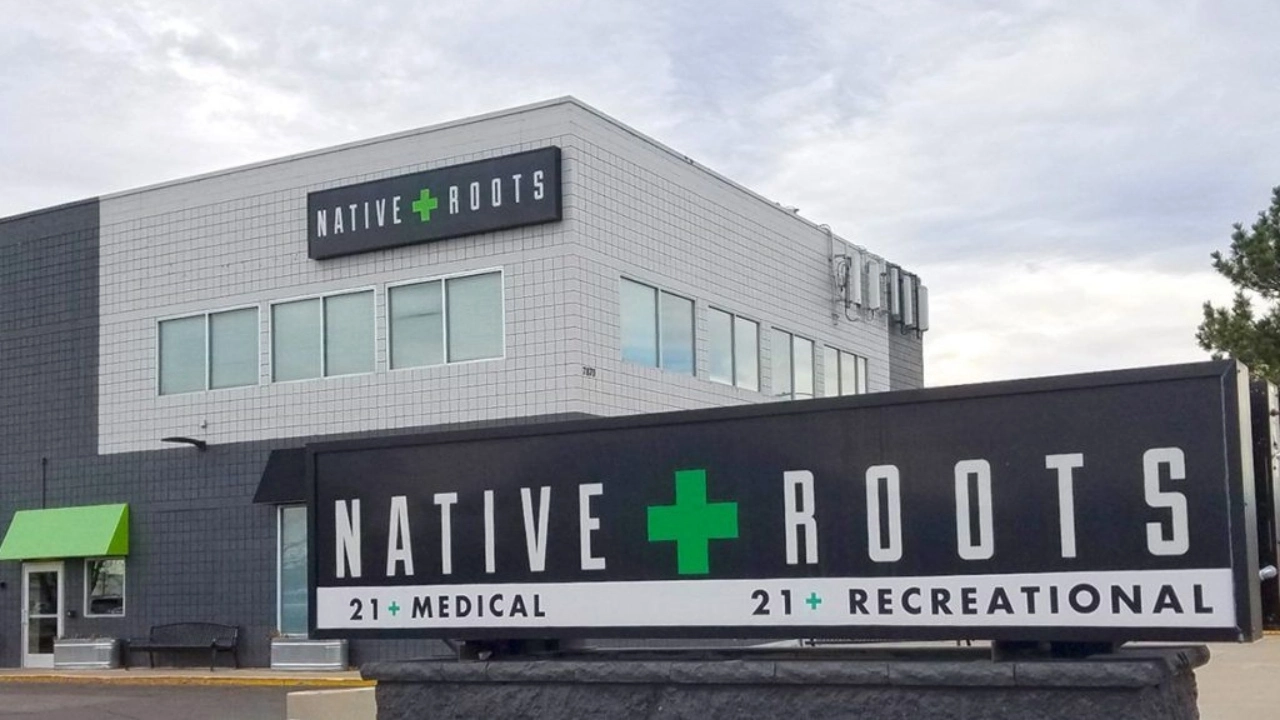
This story has been updated to reflect the number of Native Roots stores Verdant Capital Partners acquired when the deal was finalized.
The recent acquisition of a prominent Colorado cannabis retail chain is the latest sign that the national industry is entering a new phase of consolidation, observers told MJBizDaily.
Verdant Capital Partners, a recently formed cannabis-focused equity firm, on March 3 announced the purchase of 15 of Native Roots’ 21 retail stores in Colorado for an undisclosed sum.
The purchase, Verdant’s first, is still pending until regulators sign off on license transfers. Vertically integrated Native Roots will continue to run four stores as well as its cultivation and manufacturing operations, Westword reported.

And Verdant is planning more deals in other markets, where it wants to scoop up retail permits only, CEO Julien Michalowski told MJBizDaily in an interview.
“Our goal is to do three or four transactions in the next 12 months,” he said. “This sets the foundation for us.”
Cannabis dealflow shifts from vertical integration to retail only
For most of the past decade, large marijuana multistate operators drove legal cannabis industry growth by trying to build vertically integrated footprints across many states, said Hirsh Jain, co-founder of Los Angeles-based consultancy Ananda Strategy.
“That model worked for a while when capital was easy to access, but it has become harder to sustain as markets matured and financing tightened,” Jain said.
Verdant’s strategy is closer to a private equity deal than the traditional MSO expansion strategy, he added.
“Native Roots is an interesting place to start because it is one of the most recognizable retail brands in Colorado, and Colorado is one of the oldest and most competitive cannabis markets in the country,” he said.
“If Verdant can stabilize and grow a business like that, it would show that well-run regional operators still have real value even in mature markets.”
Charlie Alovisetti, a partner in cannabis law firm Vicente’s Denver office, said Verdant’s focus on retail operations isn’t surprising amid the crash of wholesale marijuana prices in Colorado.
“By just doing retail, that’s going to counter fixed costs,” he said.
Avis Bulbulyan, CEO of California-based consultancy Siva, said consolidation of distressed assets is where the cannabis industry is headed
Many acquisition targets are big-name “legacy” brands like Native Roots, he added.
“It’s way too fragmented right now, and people are barely holding on,” he said. “You’re seeing more of those acquisitions than your ‘no-name’ companies.”
A new model for cannabis private equity
Verdant is focusing on strong single-state operators with local brand recognition that have at least $20 million in revenue and multiple locations, executives said. The company will enhance those retailers’ operational efficiency once acquired.
“We are putting the focus back on what retailers do best and providing the best products and services to the customer,” said Myles Peck, an M&A expert and Verdant’s chief strategy officer.
“You may see improvements in product mix.”
“The Native Roots name and branding is a great legacy brand and name,” Peck said. “All of that’s going to stay the same. It’s shifting to pure-play retail.”
Although Colorado is not a limited-license state, Verdant plans to focus on those that are.
“We’re opportunistic, but some of the markets we’re currently tracking include Ohio, Pennsylvania, Arizona, Missouri and Maryland,” Peck said.
Native Roots co-founder returns after legal dispute
In a way, the purchase means Native Roots is coming full circle. Native Roots co-founder Josh Ginsberg is also a co-founder and principal of Verdant Capital – and had unfinished business with his old company.
Last March, Ginsberg sued former partner Peter Knobel, the latest in a series of disputes between the pair that began in 2017 when Knobel wanted to sell his shares in Native Roots to a private equity firm.
Ginsberg and a third partner, Rhett Jordan, said they had a right of first offer to buy the shares for $8.8 million.
The latest case, meant to prevent Knobel from moving assets to protect them from another major judgment, was dismissed on March 4, according to the Eagle County District Court clerk.
Ginsberg could not be reached for comment.
But that’s all irrelevant, at least as far as Verdant is concerned. A “firewall” between the company and Native Roots with regard to the lawsuit meant Verdant was not involved, Michalowski said.
The Native Roots deal is not the first time Ginsberg has worked with Michalowski and Peck.
The three were also involved in Coastal Holding Co., a California retail dispensary and delivery operator that was acquired by The Parent Company in 2021. Coastal Holding held the 10 licenses, including eight retail and two delivery licenses.
Subscribe to the MJBiz Factbook
Exclusive industry data and analysis to help you make informed business decisions and avoid costly missteps. All the facts, none of the hype.
What you will get:
- Monthly and quarterly updates, with new data & insights
- Financial forecasts + capital investment trends
- State-by-state guide to regulations, taxes & market opportunities
- Annual survey of cannabis businesses
- Consumer insights
- And more!
Trump cannabis rescheduling not affecting M&A strategy
The deal is also one of a flurry to follow President Donald Trump’s Dec. 18 executive order directing cannabis to be reclassified as a Schedule 3 drug.
These include:
- An affiliate of a Boston hedge fund outbidding Curaleaf Holdings for a Virginia vertically integrated permit that same day
- Minneapolis-based marijuana multistate operator Vireo Growth’s purchase of Eaze, the onetime “Uber of Weed,” announced Dec. 22
- Oregon edibles-maker Wyld’s acquisition of competitor Grön, announced Jan. 5
- Logistics firm Nabis’ acquisition of Humble Cannabis Solutions, announced Jan. 6
- California edible and vape brand Sunderstorm’s purchase of pre-roll brand Lime, announced Jan. 12
- KEY Investment Partners’ acquisition of Denver-based MSO BellRock Brands, whose portfolio includes Mary’s Medicinals and Dixie Elixirs, announced Jan. 12
Verdant’s strategy is to work within today’s regulatory framework rather than try to anticipate a future under federal marijuana rescheduling, Michalowski said.
But he anticipates a healthier industry and increased M&A activity if and when cannabis is downgraded to Schedule 3.
“We’ve all been hearing about rescheduling for years and years, and I’m not sure anybody knows what that looks like,” he said. “Our game plan is to focus on today’s environment and restrictions.”
Margaret Jackson can be reached at margaret.jackson@mjbizdaily.com.