
By law, New York’s $2 billion cannabis market is famously “equity first.”
In practical terms, that’s meant giving justice-impacted individuals and community-service nonprofits first crack at retail opportunities – and keeping that commitment despite near-constant challenges.
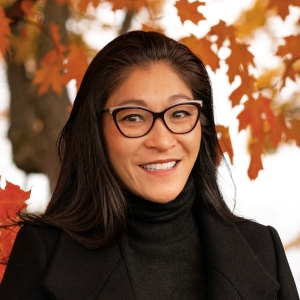
But legal cannabis in New York is also “health-forward.” And that’s putting itself with a unique position: Along with an equity chief, the state’s Office of Cannabis Management has a chief health officer.
That gives Dr. June Chin, an osteopathic physician who was named to the post in July after serving on a state advisory board, a task that’s proven difficult in other markets after adult-use legalization: keeping cannabis medical.

But that’s far from her only directive, Chin explained to MJBizDaily during a recent interview.
“I would say my role is to oversee health, safety, research, protecting patients – and, most importantly, public health,” she said. “We think, ‘Oh, there’s a physician in this role. That must mean medical cannabis.’”
“They forget that there’s public health and research and safety and lab-testing in an all-encompassing state-regulated program.”
New York cannabis has a chief medical officer
In Chin’s view, that means youth education about cannabis’ benefits and risks.
It means emergency-room personnel aware of what cannabis overuse looks like, pediatricians able to give meaningful and relevant counsel to a teenager and everyone else recognizing safe storage.
It also means giving physicians useful and updated information for when their patients – who may not be certified MMJ patients – walk into the exam room and ask what cannabis products they picked up at the adult-use store can do for them.
“We want to make sure the conversation doesn’t end there,” Chin said. “When states move from a medical market to adult-use, it increases access, but it also increases desire for therapeutic action.”
That means having ready and trusted answers to difficult questions.
“Now that it’s legalized, folks are more comfortable having an open conversation,” she added.
“There’s still stigma, but there is more support for education and safety and guidance.”
Toward that mission, Chin will moderate an upcoming gathering of cannabis clinicians, scientists and researchers next month.
Co-hosted by Northwell Health, the largest hospital and healthcare network in New York, the second annual Medical Cannabis Symposium aims to educate healthcare providers on including cannabis in practice.
The two-day event, beginning Nov. 6 on Long Island, also offers a free course for clinicians to start offering New York medical cannabis certifications.
Maintaining a focus on cannabis’ origin as a medicine – the central message in pre-legalization markets and a video extolling CBD’s benefits for seniors recently amplified by President Donald Trump – has proven tricky in other markets.
Modernizing medical marijuana
Medical cannabis patient enrollments typically plummet as soon as adults 21 and older have access to cannabis stores.
It doesn’t help that federal cannabis law remains stuck on Schedule 1 of the Controlled Substances Act. That status quo stymies research opportunities and effectively slams the door on offering plant-based pharmaceutical drugs or cannabis-based therapies through mainstream health insurance-backed providers.
New York remains one of a handful of markets that requires medical dispensaries to have a licensed pharmacist on-site.
Lawmakers appear committed to preserving the state’s MMJ system.
Gov. Kathy Hochul is expected to sign a bill into law that “modernizes our medical program,” Chin said.
Once signed, New York patients will be able to stay certified for two years rather than one, cultivate cannabis at home and enjoy an easier path toward reciprocity – having their New York MMJ certification recognized in other states, Chin said.
Medical cannabis after marijuana rescheduling
It will still be some time before cannabis retailers – or even medical providers – can say definitively what edibles or smoking flower might do for a particular ailment.
Medical claims are strictly regulated in the United States by the federal government, and Schedule 1 drugs are shut off from the Food and Drug Administration (FDA) process.
FDA approval is required before making any product claims, as the makers of various formulations that promised specific health effects learned the hard way.
Most of the cannabis industry is eagerly awaiting Trump’s next move on reclassifying cannabis under federal law.
Moving marijuana to Schedule 3, a Biden-era initiative that Trump promised over the summer to revisit, should only make things easier, Chin said.
The regulated dispensary system upon which the $32 billion national industry is based won’t go away overnight, but the state will still have its robust regulations in place,” she said.
“It will open up opportunities for research,” she said. And there will be a vibe shift., with another layer of stigma melting away.
“The conversation will change among providers – even psychologically,” Chin said.
Subscribe to the MJBiz Factbook
Exclusive industry data and analysis to help you make informed business decisions and avoid costly missteps. All the facts, none of the hype.
What you will get:
- Monthly and quarterly updates, with new data & insights
- Financial forecasts + capital investment trends
- State-by-state guide to regulations, taxes & market opportunities
- Annual survey of cannabis businesses
- Consumer insights
- And more!
Cannabis and children – and having a sober conversation
Some tricky issues will remain. Among them is the always-controversial relationship between regulated cannabis and children.
Chin and OCM recently completed a series of statewide meetings where the questions were posed: What does cannabis education look like for youth? What’s safe and what’s not?
That debate is primed to continue well after New York offers an answer.
In all, Chin is trying to ensure physicians can make safer recommendations and incorporate cannabis-based therapies into their patients’ treatment regimens when the need arises.
“The conversations are happening,” she said.
Chris Roberts can be reached at chris.roberts@mjbizdaily.com.