
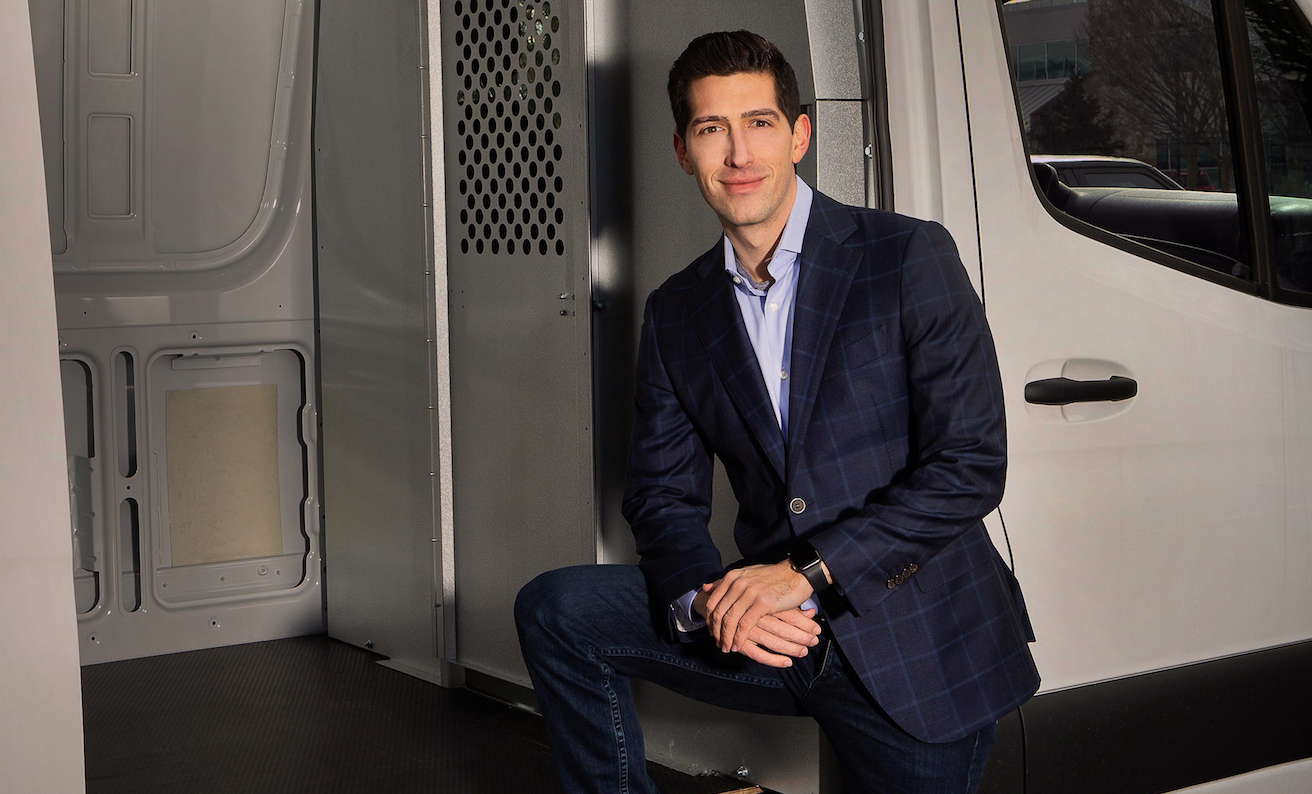
This is part of a regular series of MJBizDaily interviews with major THC industry players. To be considered for an interview, contact editorial@mjbizdaily.com.
In the cannabis industry, behind-the-scenes infrastructure can take a backseat to the interest in cultivation and retail.
But for Ari Raptis, founder and CEO of Pennsylvania-based Talaria Transportation and National Secure Transport, logistics is the unsung hero that keeps the roughly $32 billion industry moving.
With operations spanning nearly 30 states and employing 325 people, Raptis has built what he claims is one of the largest cannabis logistics and cash transportation networks in the U.S., moving $1.5 billion in product and $3 billion in cash annually.

Raptis also boasts a flawless track record, with zero product or cash losses in the seven years since he launched his companies.
He attributes his success to a compliance-first approach and hiring former law enforcement officials to provide what he calls “institutional-grade security.”
“That’s our first layer of security – we hire the right people,” Raptis said. “They’ve lived a life of protecting and serving.”
The challenges of a fragmented cannabis industry
Despite the companies’ success, Raptis is candid about the challenges of operating in a fragmented regulatory environment.
“Every state has its own rules, and many conflict with each other,” he said. “We’re essentially running 30 different versions of the same business.”
The patchwork of regulations increases costs, inefficiencies and risks for operators like Talaria.
What the industry needs, Raptis said, is a consistent federal framework.
“A clear federal rulebook that brings consistency would standardize transport protocols and compliance reporting,” he said. “Most serious operators already hold themselves to high standards, but federal guidelines would help the industry scale more responsibly.”
Interstate commerce is another inevitable milestone for cannabis.
Raptis envisions a system similar to those governing alcohol and tobacco, with structured distribution networks and clear guidelines that maintain state oversight while allowing for interstate movement.
“It would create a more stable supply chain, addressing surpluses in some markets and shortages in others,” he said.
What is the role of technology and professionalization?
Raptis sees technology as a key driver of industry improvement. Talaria’s operations are a testament to this, with its nondescript vehicles equipped for real-time tracking and 360-degree surveillance.
“It allows us to operate discretely – we don’t have a big bullseye on the back of our van, we don’t advertise on the road,” he said. “I can click into any vehicle and see its entire journey.”
This level of transparency not only enhances security but also builds trust with regulators and financial institutions.
Raptis believes the entire industry must adopt clearer standards for compliance, and technology can help financial institutions differentiate good operators from bad ones.
“If we define benchmarks around operational procedures, you’d see who was operating at a high level, and it would have a rippling effect across the industry,” he said. “It would give banks more confidence to participate.”
What is the future of cannabis logistics?
As the cannabis industry matures, Raptis emphasizes the importance of infrastructure.
“You can grow the best product, but if you can’t move it safely and compliantly, the system breaks down,” he said.
Cash management remains a significant challenge, as the industry is still heavily cash-driven because of limited access to banking. Talaria manages billions in cash annually, navigating the complexities of transparency, accounting and public safety.
While Raptis hopes for federal guidance to ease these challenges, he acknowledges that cash will remain a dominant factor for the foreseeable future.
Subscribe to the MJBiz Factbook
Exclusive industry data and analysis to help you make informed business decisions and avoid costly missteps. All the facts, none of the hype.
What you will get:
- Monthly and quarterly updates, with new data & insights
- Financial forecasts + capital investment trends
- State-by-state guide to regulations, taxes & market opportunities
- Annual survey of cannabis businesses
- Consumer insights
- And more!
A vision for responsible growth
As an entrepreneur who’s built several businesses, Raptis wants to be sure the cannabis industry is built “the right way.”
“Cannabis is following a path that other regulated industries have already gone through,” he said. “If we build it with the right infrastructure, professionalism and technology, the industry will flourish.”
Margaret Jackson can be reached at margaret.jackson@mjbizdaily.com.