

(This is a contributed guest column. To be considered as an MJBizDaily guest columnist, please submit your request here.)
Courtesy Photo
The first time I understood cannabis enforcement, I was with five friends on the side of a road while police searched our car.
Only one of us was white. He had smoked a blunt. An officer said he smelled cannabis, and that was reason enough to detain all six of us and search the vehicle.
The officer didn’t know who had smoked or what lives we would go on to lead. In that moment, a smell turned a group of young men into a police matter.

My white friend later became an exceptional legal cannabis grower, but prohibition affected him by criminalizing the plant around which he developed expertise.
I entered government and worked on cannabis regulation, social equity funding and business development.
Both stories belong in the legal cannabis industry. But that encounter taught me that the same law can touch several people without leaving the same scars.
That difference is what equity is supposed to measure.
Are diversity and equity synonyms?
Diversity asks who is present.
Inclusion asks who is permitted to participate.
Equity asks who was harmed, what was taken from them and whether resources, authority and opportunity are being directed toward repairing that injury.
A cannabis company can employ people of different races and genders while ownership, investment and executive control remain concentrated among people with the greatest access to capital.
A regulatory commission can look diverse even if none of the members were arrested, prosecuted, evicted or otherwise affected by cannabis prohibition.
Equity is not about assembling the most demographically diverse group. It is about correcting an identifiable imbalance between people who were injured and those receiving the benefits.
Who was harmed by prohibition?
Between 2010 and 2018, American law enforcement made more than 6.1 million cannabis-related arrests. In 2018 alone, police made nearly 700,000 cannabis arrests, according to the American Civil Liberties Union.
Black people were 3.64 times more likely than white people to be arrested for cannabis possession despite comparable usage rates. That disparity existed in every state and in more than 95% of the counties studied.
Cannabis-possession arrests disproportionately affected Black boys and young men, according to a JAMA Health Forum study on cannabis arrest rates in 43 states. Even where legalization and decriminalization reduced total arrests, racial disparities frequently remained.
But race alone cannot tell the complete story of harm.
A white man whose cannabis conviction cost him employment has a legitimate claim. So does a Black woman whose household lost income when her son was incarcerated as does an immigrant arrested under American cannabis laws.
Black men require particular attention because national enforcement data show that Black communities were disproportionately targeted, while gender data and research indicate that much enforcement landed on boys and men. Their experiences should not disappear beneath broad categories such as “minority,” “BIPOC” or “people of color.”
Equity is not a trophy awarded to the demographic group that makes the broadest historical claim.
It is a system for documenting harm and delivering repair.
Who should lead the cannabis industry?
Long before cannabis became a legal investment opportunity, people cultivated it, developed products, cared for patients, organized legalization campaigns and created the knowledge that today’s companies monetize.
Some of those people operated outside the law because the legal market did not exist. Some were arrested. Others lost scholarships, careers, housing or years with their families. Their neighborhoods endured surveillance and aggressive enforcement while wealthier communities consumed the same plant with fewer consequences.
These people did more than suffer from cannabis prohibition. They helped shape the cannabis world that now exists.
Leadership – including regulators, advisory board members and grant reviewers – should include them.
The United States lacks a census identifying cannabis owners, executives and regulators by race, gender and history of prohibition-related harm.
Government cannot prove that people most affected by prohibition possess meaningful authority because it has largely failed to count them.
That is not merely a data problem. It is an accountability problem.
What does leadership data show?
Massachusetts offers one of the clearest demographic examinations. Of the state’s 3,444 senior cannabis positions, white men held 57.7%, Black men held 3.5%, and Black women held 1.7%, according to the Massachusetts Cannabis Control Commission.
The point is that the people represented most heavily in prohibition’s enforcement statistics do not control the legal industry in proportions comparable to the people who entered with capital and institutional access.
Maryland demonstrates that policy design can change access. Among reported owners and investors in active cannabis businesses in 2025, white men represented 59.85%, while Black men represented 3.51%, according to the Maryland Cannabis Administration’s Minority Participation Report.
But among majority owners selected through Maryland’s 2024 social-equity licensing round, Black men represented 33.2% and Black women represented 20.5%.
That change resulted from intentional policy.
But a license is not the same as a functioning business. Without capital, property, technical support and protection against predatory agreements, a license is little more than an expensive piece of paper.
What did I learn inside government?
When I administered cannabis-equity and business-development initiatives in Portland, Oregon, I learned how easily repair can drift into generic economic development.
Directly harmed individuals are often expected to compete against established nonprofits, well-connected businesses and professionally staffed institutions that have grant writers, attorneys and government relationships people emerging from criminalization rarely have.
The result can look diverse while reproducing the original imbalance in power.
Institutions invite harmed people to describe their suffering, but the authority to distribute money and define success frequently remains with those who haven’t been harmed.
Black men, who illustrate the injustice of prohibition, are not frequently welcomed as owners, officials and overseers empowered to direct the repair.
America is comfortable placing an “O” beside a Black man’s name when it means offender. It must become equally comfortable when it means owner, official and opportunity.
How can cannabis equity be measured?
Cannabis equity must be judged through four measures:
Ownership: Who holds beneficial ownership, voting control and the right to receive profits?
Oversight: Who regulates the industry, awards licenses, enforces compliance and decides how cannabis revenue is spent?
Opportunity: Who receives capital, contracts, property assistance, training and pathways beyond entry-level retail employment?
Outcomes: Which businesses open, remain independent, survive and create transferable wealth?
The growers, patients, advocates, defendants, families and communities who pioneered the industry should not be pushed aside now that investors and institutions consider the industry respectable.
Subscribe to the MJBiz Factbook
Exclusive industry data and analysis to help you make informed business decisions and avoid costly missteps. All the facts, none of the hype.
What you will get:
- Monthly and quarterly updates, with new data & insights
- Financial forecasts + capital investment trends
- State-by-state guide to regulations, taxes & market opportunities
- Annual survey of cannabis businesses
- Consumer insights
- And more!
Access to money may qualify someone to invest in cannabis. Access to political power may allow someone to influence its regulation.
Neither automatically qualifies that person to define equity.
Diversity changes who appears in the room.
Equity changes who possesses authority, who receives repair and who shares in the wealth.
America has begun accomplishing the first. It has not yet delivered the second.
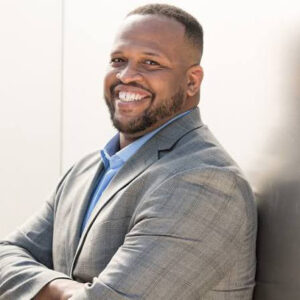
Akil S. Patterson is a former Division I football player and public-policy executive who served as Portland’s SEED Initiatives coordinator and as Prosper Portland’s cannabis business liaison. His work spans cannabis equity, regulation, government relations and civil-rights advocacy.