
Key points:
- “Oil Day,” or 7/10, flopped as a sales holiday this year, driving just a 4% sales lift over a normal Friday.
- Cannabis concentrates stay a small slice of retailer sales, but the buyers are high-value.
- Price compression widened the customer base. Live resin that once sold for $40 a gram now runs as low as $10 before tax.
Once a niche item, cannabis concentrates have quietly become one of retail’s most reliable growth drivers.
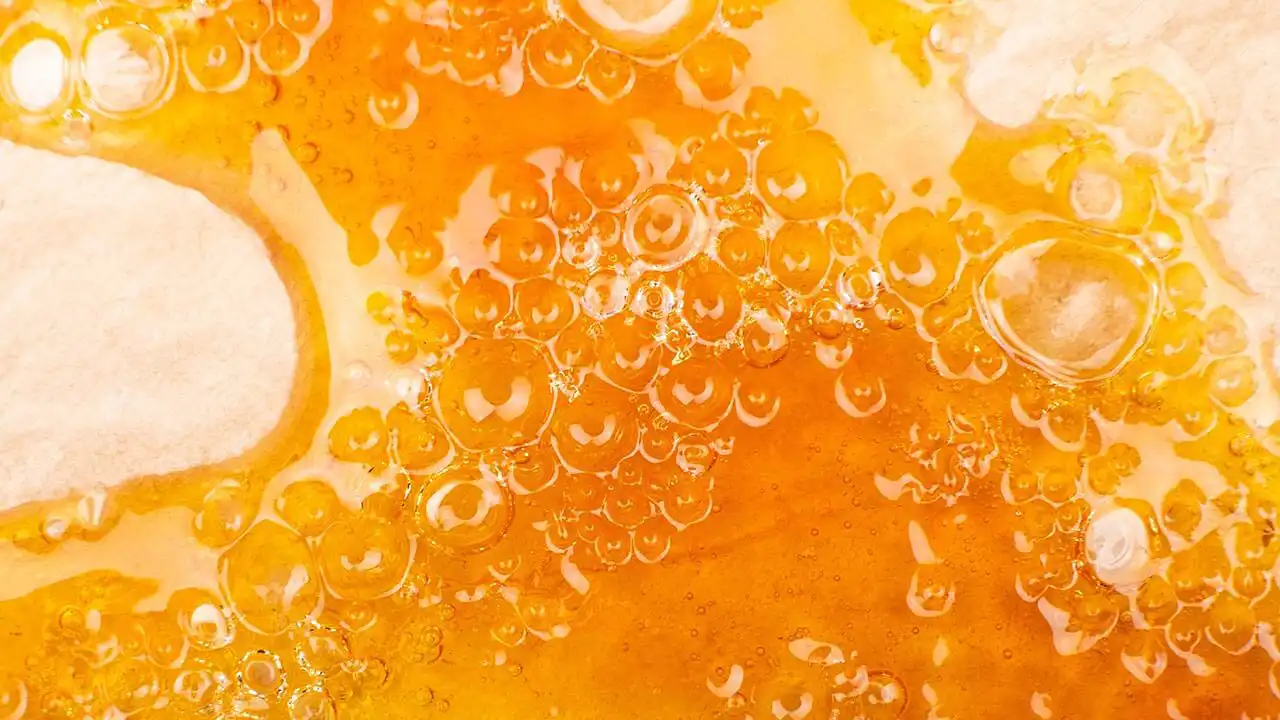
Extracts are the basis of vapes, edibles, infused pre-rolls and premium hash sales year-round even as 7/10 – the industry’s designated concentrate holiday and a dabber’s answer to 4/20 – fails to move the needle.

“Those extracts power the whole edibles sector – it comes from hash,” said David Downs, organizer of Hash Week, a week-long California-based celebration timed with 7/10, sometimes called “Oil Day.”
“We’re talking about concentrates – edibles, vapes and the loose-gram hash market. They’re all extracts.”
With cannabis oil becoming a growth driver throughout the year, consumers no longer wait for the manufactured 7/10 holiday to purchase it.
Back in 2022, concentrate sales jumped 67.4% on 7/10, according to Headset, with rosin sales surging 213% versus the preceding four Saturdays – a genuine holiday spike by any measure.
But this year, 7/10 delivered a 4% bump over a normal Friday, according to dispensary operating system tracking system Sweed. In contrast, 4/20 drove a 136% sales spike this year.
On 7/10 itself, concentrates accounted for just 5% of purchases. Flower and vapes had about 70% of the mix, the same share they command on any other day, according to Sweed.
Do cannabis concentrates sell well?
For most retailers, concentrates remain a smaller slice of overall sales. But the customers buying them matter more than the raw percentage because the amount they spend on concentrates is greater than what other consumers spend on flower or edibles.
Concentrate buyers as the industry’s super consumers, Downs said. They have higher tolerances, spend more – and on more items, such as clothes and accessories as well as high-value cannabis products – and account for a disproportionate share of total THC consumed, he said.
“It’s not about the raw numbers,” he said. “It’s about the passion of the segment.”
Eli Melrod, co-founder and CEO of Solful, a retailer with locations in San Francisco and Sonoma County, California, said concentrates account for about 7% of the store’s sales.
“While concentrates are still a smaller category, our highest-value customers are people who buy premium concentrates,” Melrod said.
“People are looking for more specialty, limited-edition, small-batch stuff. You can really develop a customer base in that category.”
Solful leans into that group with rare products most commercial shelves never carry: six-star full melt – a resin that liquefies and vaporizes without leaving charred contaminants behind – dry-sift pressed hash and limited-edition rosin sourced from small growers like Alpenglow Farms.
The store’s 7/10 Hash Week events drew about 100 people with high-ticket items, a contrast to the lines-out-the-door volume of 4/20.
Are concentrates spreading into other categories?
Concentrates now flow into other product categories. In 2026, California vape sales eclipsed flower sales for the first time. (Vapes, which Melrod calls “an extension of concentrates,” account for up to 20% of his sales.) And sales of infused pre-rolls climbed 14% year over year.
According to data from Headset, which separates vapes from concentrates:
- Flower is still king, coming in at No. 1 with $8.2 billion in sales on 321.6 units for 39.3% of market share.
- Vapes have overtaken pre-rolls as the No. 2-selling cannabis product in the U.S. with $5.3 billion in sales on 231.8 million units, or 25.2% of the market share, last year.
- Pre-rolls are No. 3 with $3.3 billion in sales on 369.4 units for 15.9% of market share.
- Concentrates landed at No. 5 with $1.1 billion in sales from 59.7 million units, representing 5.2% of market share.
In California, vapes have been outselling flower for over a year.
Meanwhile, price compression has widened the market. Live resin that once commanded $40 a gram now sells for as little as $20 before tax. Cheaper oil makes it possible to infuse more products.
Are concentrates worthwhile for cannabis manufacturers?
With so many products requiring concentrates, there’s plenty of work for cannabis manufacturers. But creating a healthy market for concentrates required years of consumer education, said Michelle Brinkerhoff, co-founder and chief operating officer of Colorado-based Edun.
Eden launched a live rosin vape cart in 2022. There were doubts it could work because the oil clogs devices. So her team engineered a wider-bodied 510-threaded cartridge to house two atomizers. That allowed a full hit with a slower burn, and made it possible to vaporize rosin far thicker than distillate.
“When we first launched, there really wasn’t anybody out there doing a live rosin cart, and at the time, nobody believed you could even put live rosin into a cart and make it work,” Brinkerhoff said.
“We had a huge educational process on our hands.”
That work paid off.
Edun has posted 519% in cumulative growth in vape sales since launching the category, an 83.6% compounded annual growth rate, according to the company.
Edun sells twice as many 510-thread carts as it does all-in-one devices.
Are cannabis concentrates immune to price compression?
Scale tells the same story at Colorado-based Bonanza Cannabis, which now in four states.
Revenue has climbed 15% to 29% over the last five years even as unit prices fell, driven by larger-capacity devices and improved hardware reliability. The 4-gram vape devices, which sell for about $24, are driving the surge in revenue, Bonanza co-owner Corey Keller said.
“It was $30 for 1 gram when we started,” Keller said. “Now they’re as cheap as $5.”
But growth comes at a cost.
Bonanza now faces material shortages in Colorado, with fewer harvests planted and supply tightening after wildfires triggered heavy-metals testing failure.
Bonanza buys more distillate than many other Colorado vape companies. Because of the volume – 200 kilograms per month – Keller expects a discount.
Subscribe to the MJBiz Factbook
Exclusive industry data and analysis to help you make informed business decisions and avoid costly missteps. All the facts, none of the hype.
What you will get:
- Monthly and quarterly updates, with new data & insights
- Financial forecasts + capital investment trends
- State-by-state guide to regulations, taxes & market opportunities
- Annual survey of cannabis businesses
- Consumer insights
- And more!
“We need so much oil that if we miss one week’s worth, it’s a massive number,” he said. “Growers are shopping around. We’ll take 50 kilos and write a check for $100,000, but we want a lower price.”
“If they decide to shop before coming to us, there’s sometimes not as much supply as we need.”
Margaret Jackson can be reached at margaret.jackson@mjbizdaily.com.