
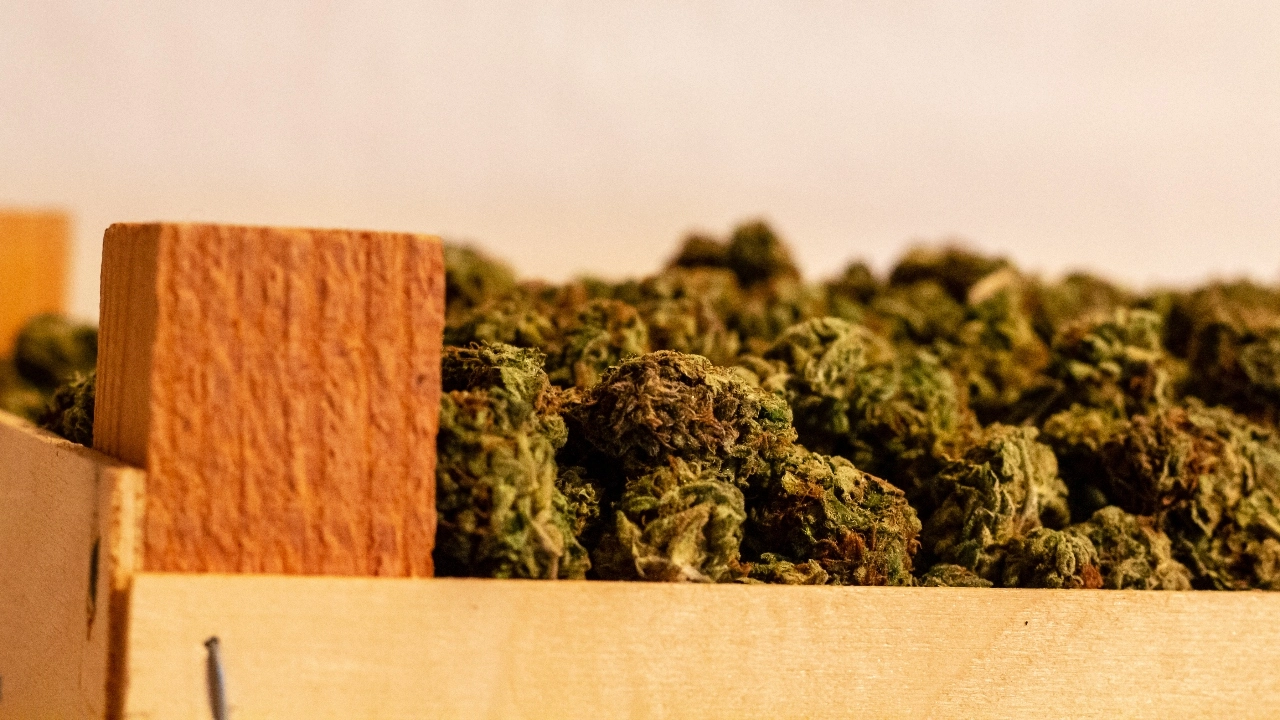
Long a boon mostly for Canada, still the world’s biggest exporter of cannabis, Germany’s growing appetite for medical cannabis threatens to reshape the global marijuana market and trigger a race among major international players to seize and ensure a share of the pie in rapidly expanding Europe.
These include U.S.-based marijuana multistate operator Curaleaf Holdings as well as Canadian licensed producers who have long dominated global cannabis trade.
And recent changes in Germany that threaten to reduce the amount of cannabis flower covered by health insurance – coupled with a growing unwillingness in Europe to accept cannabis from Canada over European Union Good Manufacturing Practices-compliant supply grown locally – mean production in Portugal, South Africa and elsewhere may chip away at Canada’s lead.
Germany remains the world’s leading importer of cannabis after a record 203 kilograms of medical cannabis entered the country last year, according to statistics from Germany’s Federal Institute for Drugs and Medical Devices (BfArM) available in the MJBiz Factbook.

According to Stratcann, almost half of the cannabis imported into Germany – 93,000 kg – originated in Canada. Portugal was a distant second, supplying 55,000 kg.
The boom is poised to continue with another record year after Germany imported another 67,000 kilograms in the first quarter of 2026, the most recent data available, according to BfArM.
That’s part of the reason why North American producers are ramping up investments in European cannabis operations rather than focusing on exports solely from Canada.
“Canada holds the near term on volume, infrastructure and reliability, but its share over the next three years will have to be defended on genuine end to end pharmaceutical quality, not on the cost and logistics advantage that built it,” Stephen Murphy, founder and CEO of Prohibition Partners, a London-based cannabis market intelligence firm, told MJBizDaily.
Who is the leading European cannabis producer?
In response, Canadian LPs Aurora Cannabis and Tilray Brands are expanding European footprints – with Aurora making two purchases in the UK. And earlier this year, Curaleaf completed a buyout of German firm Four 20 Pharma, which employs 110 people at a EU-GMP cultivation facility in Paderborn.
Both Tilray and Aurora also produce cannabis in Germany.
- Aurora spent about CDN$6 million on its Leuna, Germany, facility earlier this year.
- Tilray launched German-grown products, including the ARX brand, in June 2026.
And German firms are in the mix.
- DEMECAN recently announced a multimillion-euro investment to double annual production capacity to four tons.
Which countries are the biggest medical cannabis importers?
Globally, Australia ranks second behind Germany, according to the MJBiz Factbook.
According to data from Australia’s Office of Drug Control released Aug. 19, cannabis imports increased from 7,306 kilograms in 2021 to 81,119 kilograms in 2025.
Canadian LPs supplied 49,107 kilograms, down significantly from the 62,111 kilograms supplied in 2025.
That decrease is partially explained by a sharp increase, from 1,093 kilograms to 20,658, of cannabis from Thailand, according to ODC.
But “(t)he headline numbers mask real structural strain,” said Murphy, who noted that Germany depends on imports while Australia’s domestic cultivators face increasing competition from lower-cost overseas suppliers.
Which countries export the most medical cannabis?
Canada exported about 276 metric tons of medical cannabis flower in 2025, valued at C$643 million when extracts are included, according to Statistics Canada.
But Portugal is becoming one of Europe’s leading processing and export hubs.
Producers in that country exported 66,305 kilograms of medical cannabis during the first half of 2026, over 80% of its full-year 2025 total of 55,164, according to Infarmed.
The third and fourth-largest exports in 2025 were Denmark and South Africa.
Can Canada maintain its medical cannabis export lead?
Murphy believes Canada’s lead is becoming more difficult to maintain.
The country’s “dominance rests on two advantages that are both eroding,” he told MJBizDaily.
As more countries export to Europe, wholesale prices are narrowing, reducing Canada’s pricing advantage.
And Canada’s export success has relied on cannabis being cultivated under agricultural standards before pharmaceutical processing is completed in Europe, a model increasingly questioned by German regulators, Murphy added.
On June 8, 2026, the State Office for Health and Care in Hesse, Germany’s fifth-largest state by population, issued guidance that identified drying as a critical manufacturing step. It added that GMP-compliant processing, including drying and trimming, should generally occur where cannabis is harvested.
While not an EU-wide rule, German authorities have debated where GACP ends and GMP begins. But the upshot is that Canadian-compliant production may no longer satisfy German importers, meaning the next top exporter could be another country.
“If GMP obligations move upstream to the point of cultivation, the entire sourcing map changes,” Murphy said.
“The producers who treated this as an agricultural business are the most exposed.”
Subscribe to the MJBiz Factbook
Exclusive industry data and analysis to help you make informed business decisions and avoid costly missteps. All the facts, none of the hype.
What you will get:
- Monthly and quarterly updates, with new data & insights
- Financial forecasts + capital investment trends
- State-by-state guide to regulations, taxes & market opportunities
- Annual survey of cannabis businesses
- Consumer insights
- And more!
What will the global medical cannabis market look like next?
But Germany is expected to remain the world’s largest medical cannabis import market even as more countries legalize cannabis, Murphy said.
He expects more intra-European trade as Danish and Portuguese production expands and meets European pharmaceutical requirements.
Going forward, lower-cost producers in Latin America and South Africa are expected to capture additional market share, while higher compliance costs favor larger operators.
“Competition among exporters is intensifying as more origins qualify and prices compress,” he said. “Regional supply chains are hardening as Europe increasingly sources within its own regulatory bloc.”