
Key points:
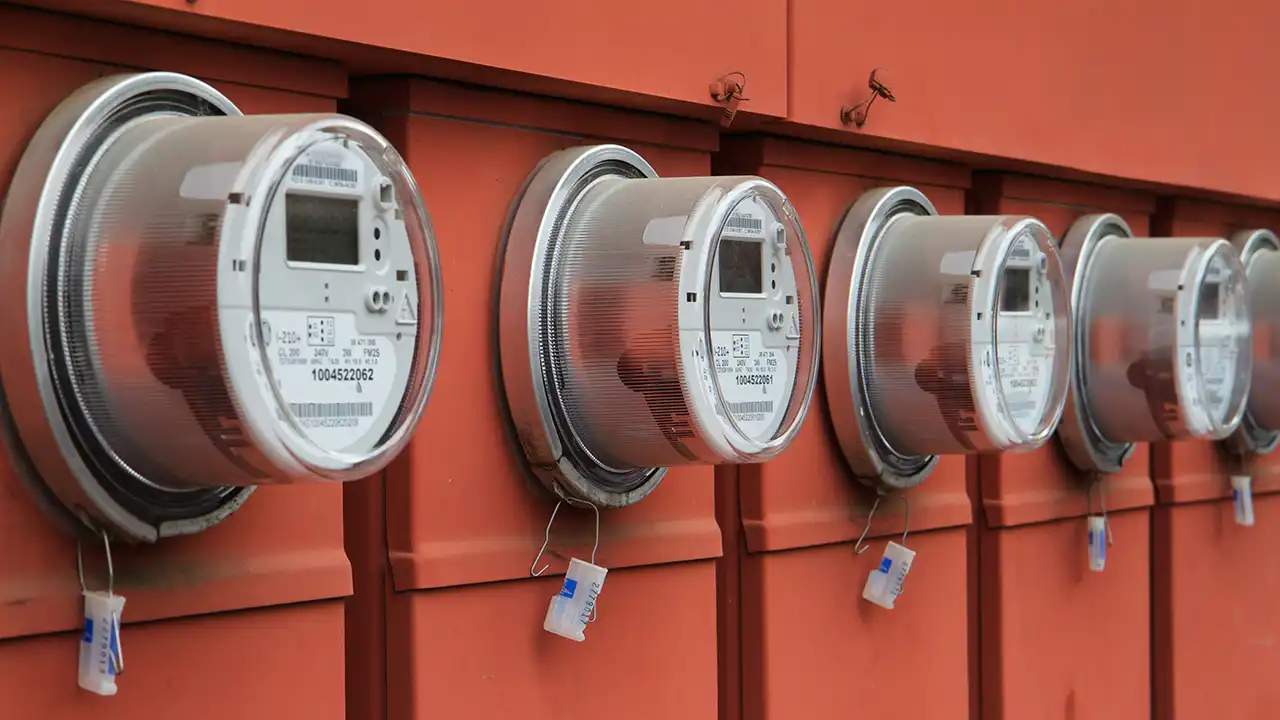
- U.S. electricity costs rose 5.9% over the 12 months that ended May 31, creating another pain point for cannabis cultivators running energy-intensive operations.
- Increased usage thanks to artificial intelligence data centers and increased fuel costs attributed to the Iran war are contributing to the surge in power costs.
- Indoor cannabis grows use about 50 times more power per square foot than an office building.
- This is increasing producers’ overall costs and tightening margins as pressures from the illicit market mean operators can’t pass costs onto consumers.
Tiana Arriaga has watched helplessly as her electricity bills climbed by tens of thousands of dollars a month.
As the vice president of product and marketing at vertically integrated marijuana multistate operator Standard Wellness, which has cultivation facilities in Missouri, Ohio and Utah, she runs indoor rooms with full environmental automation: air conditioning, humidity controls and lighting – all of it running nonstop, and all of it creating another headache for a company struggling with slim margins.

Arriaga said she’s seen electricity costs for Standard Wellness increase between 8% and 12% over the past 16 months as massive data centers and the war in Iran drive up U.S. energy costs.
“This may seem like a small number, but it is quite a step when you are operating vertical operations such as ours,” she said. “Natural gas has also gone up dramatically, and we are seeing a 46% increase from the last two years.
“When you have incremental costs on a residential bill, it’s expensive. On a cultivation facility, it’s astronomical.”
Can’t cannabis operators just raise prices?
The national energy index rose 3.9% in May, after increasing 3.8% in April and 10.9% in March, according to the U.S. Bureau of Labor Statistics. Over the 12 months ended May 31, the cost of electricity has risen 5.9%.
“We haven’t seen this much new load coming onto the grid since the Industrial Revolution,” Paul Shagawat, co-founder of energy procurement firm Transparent Energy, told MJBizDaily.
Rising power prices – and a grid straining under the new data center load – are squeezing margins across cultivation, manufacturing and processing. And with consumers unwilling to spend more on cannabis with cheaper illicit market product available, they can’t raise prices to recoup those costs.
“You have to know your COGS [cost of goods sold],” Arriga said. “In Missouri, for instance, price compression is real. You have to produce more for less margin. We’re selling a lot more flower, but we’re not seeing the rate of return because pricing has changed.”
While worsening recently, the pressure isn’t temporary. Energy prices have increased an average of 7% per year over the last 50 years, said Ori Bytton, co-founder and CEO of Sacramento, California-based cultivation and manufacturing company Natura, whose brands include Sluggers Hit, Dee, Lola and Iced.
“It’s the biggest input you can’t really control,” said Bytton, who worked in the energy industry at Canopy Energy, a solar business he founded in 2016.
And cannabis cultivators are feeling it.
Indoor cannabis grows use about 50 times more power per square foot than an office building, Shagawat said. HVAC, ventilation and dehumidification account for about half of all consumption, and unlike lights, these systems must run 24 hours a day – every day.
“We’re living in interesting times when it comes to cost and what’s affordable and what’s not,” Arriaga said. “I don’t think we’re going to see cheaper prices, which is also alarming.”
Although the cost to produce cannabis is rising, operators generally can’t pass those increases along to consumers in the form of higher prices.
“We don’t dictate the price – the market dictates the price,” Bytton said. “If our costs go higher, it does not mean our consumers pay more, mainly because we’re fighting an illegal market.”
How are cannabis cultivators grappling with increased energy costs?
Bytton designed his operation around energy costs from the ground up. His 300,000-square-foot facility comes with a $400,000 monthly power bill – a figure he said is efficient.
Bytton built a clear-roof, controlled-environment facility that competes with indoor growers while cutting energy use by 10%. A commercial chiller system cools the air and removes humidity at the same time, replacing the dueling AC and dehumidification systems that he said “almost fight one another” in conventional indoor rooms.
The facility has run all LED lights since it was built six years ago and produces about 70,000 dry pounds of cannabis a year.
Among the reasons Bytton chose Sacramento was because of lower electricity costs relative to the rest of the state. The company’s power from the Sacramento Municipal Utility District costs 12.7 cents per kilowatt-hour, compared with rates of nearly 45 cents per kWh in municipalities served by Pacific Gas & Electric Company (PG&E) or Southern California Edison, Bytton said.
Even so, his utility bills have increased annually.
He’s now adding AI systems to analyze inputs and dim the lights by 20% when the sun is strong.
“The operators who win in the next decade will be the ones who engineer around energy costs,” Bytton said. “Treat energy as a central cost like labor, or you’ll struggle to stay in business.”
What can cannabis operators do to save money?
Operators have more choices to mitigate the cost than they often use.
Shagawat says 99% of cultivators in deregulated markets, such Illinois, Ohio and New York, can buy power outside their local utility, yet many are single-sourced to one supplier.
His firm runs live auctions, pulling utility data and letting suppliers like BP, Shell and NextEra bid on fixed-rate contracts of 12 to 72 months. The fixed rate holds even when market prices rise, creating budget certainty.
Other measures worth evaluating include:
- Upgrading to LED lighting where strain performance allows
- Building solar and battery microgrids for resiliency
- Deploying AI energy management to cut consumption
- Choosing low-cost regions for new builds
Geography also matters, Shagawat said.
California is among the most expensive states for power, as are states in the Northeast. Even prices in Texas are climbing as data centers multiply, he said.
Power costs in the Southeast are cheaper, as they are in Montana, Wyoming and the Dakotas.
Subscribe to the MJBiz Factbook
Exclusive industry data and analysis to help you make informed business decisions and avoid costly missteps. All the facts, none of the hype.
What you will get:
- Monthly and quarterly updates, with new data & insights
- Financial forecasts + capital investment trends
- State-by-state guide to regulations, taxes & market opportunities
- Annual survey of cannabis businesses
- Consumer insights
- And more!
But Arriaga said that the farther a cultivation gets from an urban center, the more difficult it is to find labor.
“A staff shortage is expensive, and it’s expensive to hire and train someone,” she said. “The more remote you are, the more travel time there is. If something breaks, it could take a couple of days to get parts.
“Electricity may be cheaper, but everything else is just more costly.”
Margaret Jackson can be reached at margaret.jackson@mjbizdaily.com.