
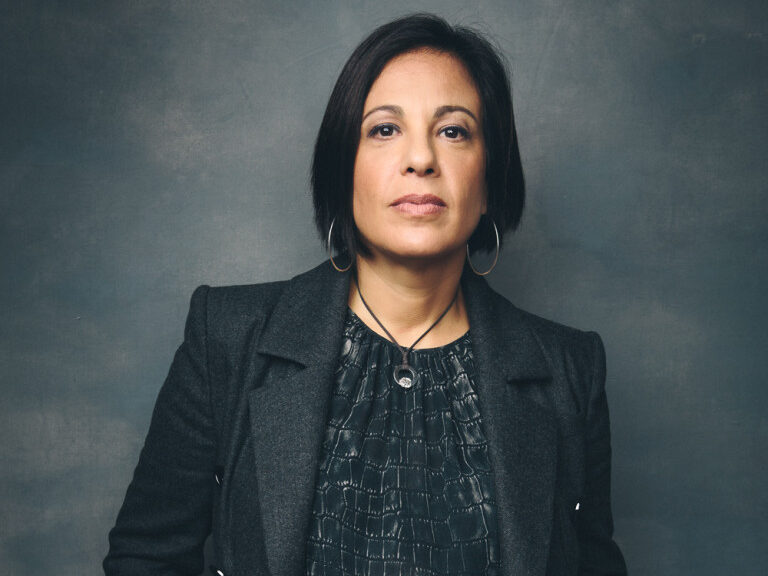
This is part of a regular series of MJBizDaily interviews with major THC industry players. To be considered for an interview, contact editorial@mjbizdaily.com.
Joanne Wilson has blunt advice for anyone considering entering the cannabis business in 2026.
“Don’t do it,” the New York City-based angel investor and cannabis retailer told MJBizDaily in a recent interview.
It’s a stark warning from someone who backed more than 140 companies before putting her own money behind Gotham, a four-store New York cannabis retailer she founded in 2022.

Wilson isn’t getting out of New York cannabis industry, which is en route to another record year after posting $1.7 billion in annual sales in 2025.
But after experiencing the economics and regulatory challenges of cannabis retail – and leading a charge against worker-friendly requirements in state law that she claims are driving up costs – Wilson thinks prospective operators should wait for conditions to improve before jumping in.
“If I was not selling cannabis, I was selling anything else, I would be at a very different point of the trajectory of this company,” Wilson said.
“I feel that every single day today.”
Why did Joanne Wilson enter the cannabis industry?
A prominent New York investor who’s married to venture capitalist Fred Wilson, Joanne Wilson’s portfolio incudes Food52, Eater and Parachute Home.
Wilson studied retail and finance before she graduated in 1983 from Simmons College. She began her career at Macy’s, and has long wanted to do retail.
“I had this idea of a store that I had wanted to start forever,” she told MJBizDaily.
During the COVID-19 pandemic, she returned to the idea. With New York moving toward adult-use legalization, she went with cannabis.
Wilson opened Gotham’s first store via the state’s Conditional Adult-Use Retail Dispensary program, which reserved licenses to marijuana social-equity applicants.
Gotham qualified through a partnership with Second Chance New York, a nonprofit affiliated with workforce development organization STRIVE. New York City Community Board 3 records show Second Chance held 51% of Gotham CAURD, while a trust owned by Joanne and Fred Wilson held 48%.
Gotham pursued additional locations through the state’s general adult-use retail licensing process.
The first store opened in the Bowery in 2023. It now operates four stores: in Chelsea and Williamsburg in New York City and in the town of Hudson as well as Bowery.
What’s wrong with the cannabis industry today?
Wilson points to price compression, high operating costs, competition from unlicensed sellers and what she considers insufficient government guidance from New York state regulators as reasons the legal market is more difficult than she anticipated.
Her response has been to rethink costs she can control, including staffing and store size.
Gotham has restructured twice, reducing staffing in its stores and executive team.
Wilson did not provide dates or the number of positions eliminated, but Gotham has added self-ordering kiosks.
She’s also considering downsizing further.
The Bowery store is about 2,800 square feet, while Gotham’s Williamsburg location leased 4,000 square feet.
“We can do smaller stores,” Wilson told MJBizDaily.
Wilson didn’t provide a target size or staffing level for future stores.
“We can afford to take on more stores, but we’ll take them on differently than we did before,” she said, without offering specifics on how many additional locations Gotham is considering or where they would be located.
Can cannabis businesses find cost savings fighting organized labor?
Wilson is re-thinking her labor costs while at the center of a broader worker dispute – and while attempting to fight off a unionization push at Gotham’s Brooklyn store.
On April 1, 2025, less than six months after the Williamsburg location opened for business, Mineola, New York-based Local 338 of the Retail, Wholesale and Department Store Union – affiliated with the national United Food and Commercial Workers Union, which represents many U.S. cannabis employees – informed Gotham that majority of employees had voted to unionize.
The year before, in March 2024, Gotham’s parent company had signed a labor peace agreement with Local 338 as part of its requirements to obtain a state license.
Gotham responded to the unionization push by challenging the whole process in federal court, including the constitutionality of the LPA requirement in New York law as well as the “legitimacy” of the union election.
In return, the union filed a bevy of complaints at the National Labor Relations Board accusing Gotham of unlawfully stonewalling contract negotiations while punishing pro-union employees with layoffs.
Both the federal court case and the matters at the NLRB are still pending. But Wilson is confident the company will prevail.
“And essentially we have won, but we are waiting for the finale, but everything has been written,” she said.
Are labor costs driving up prices for cannabis consumers?
Other states have ditched the LPA requirement after a string of losses in federal court. Sensing the vulnerability, New York is considering replacing LPAs with a Cannabis Industry Wage Board that would recommend a minimum wage.
Passed by state lawmakers in June, the bill is awaiting action by Gov. Kathy Hochul, to whom Wilson has donated. And Wilson is dead set against the wage board.
“It will create higher prices on cannabis,” she said.
Wilson did not disclose whether Gotham is profitable, but a recent survey of 40 New York cannabis licensees found 57% reported losses in their most recent fiscal year, while 57% had cut jobs or kept staffing flat. Only 36% reported being profitable.
After restructuring twice to reduce costs, Wilson claimed Gotham can still afford to open additional stores, using smaller locations with less overhead.
But that’s not the business she was anticipating.
“Investors invest in companies that they think have the ability to be billion-dollar businesses,” she said. “No one is investing in a singular dispensary.”

How can cannabis retail be fixed?
Despite her warning away prospective cannabis entrepreneurs, Wilson continues looking for ways to make Gotham’s model work. That includes greater freedom for licensed retailers to sell cannabis away from their stores.
“The key to this business or any business is don’t expect to just make money inside your four walls,” she said.
New York allows retailers to sell cannabis at certain Office of Cannabis Management-approved Cannabis Showcase Events, including some pop-ups and public markets. But what Wilson wants to do is supply special events like weddings, an idea thwarted by OCM rules prohibiting alcohol from being sold or served at a Cannabis Showcase Event.
Wilson believes cannabis retailers should have more freedom to sell at farmers markets and events, just like alcohol merchants.
“If you don’t make sure that the farmers are right, the brands are right, the dispensaries are right – I mean, it all is connected,” she said.
“When you pull one thing out, everything collapses.”