
- President Donald Trump’s acting Attorney General Todd Blanche on Thursdsay signed an order moving FDA-approved cannabis and cannabis produced by state-licensed medical marijuana operators to Schedule 3 of the Controlled Substances Act.
- Marijuana rescheduling does not apply to adult-use cannabis operators.
- However, Blanche also scheduled a hearing to “fully reschedule” cannabis for June 29.
- Cannabis is not legal, and the order does not legalize interstate commerce or banking access.
- The plant-touching industry is still celebrating the biggest shift in federal drug policy since 1970.
Cannabis is now officially medicine again in the United States, but restrictions still apply.
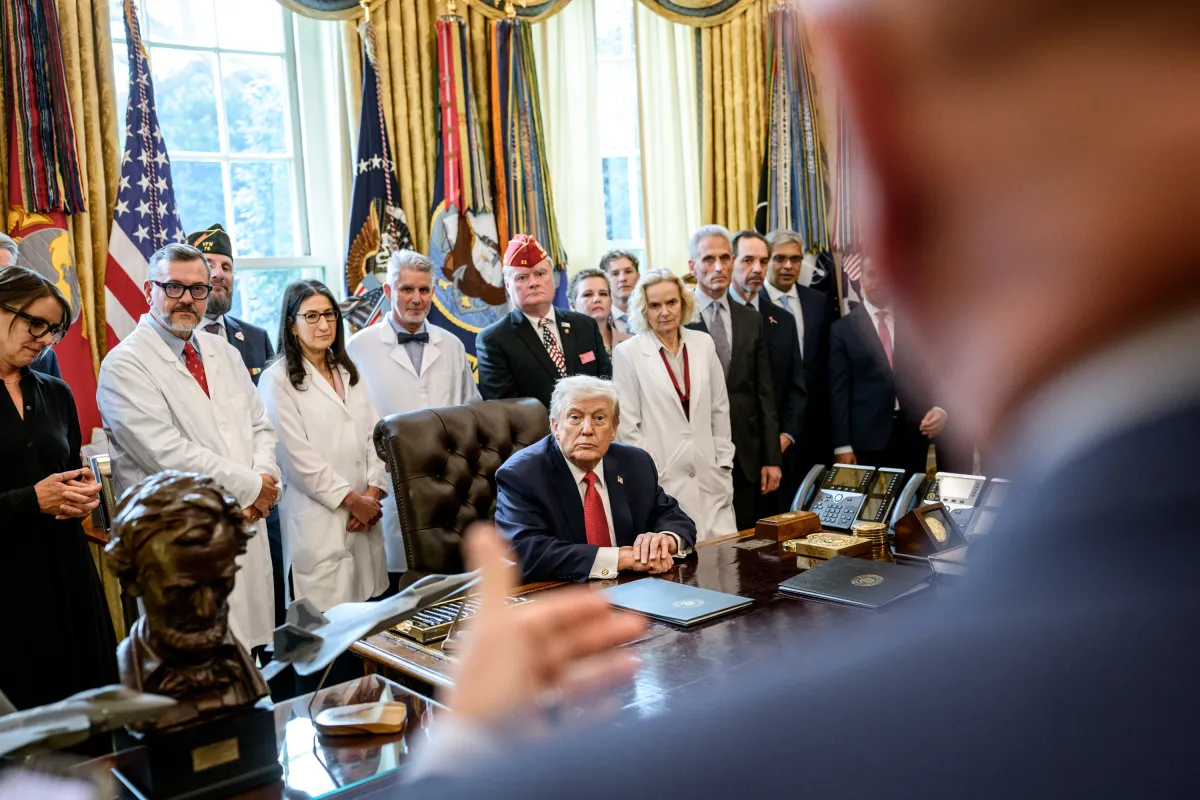
Fulfilling a December executive order from President Donald Trump, acting Attorney General Todd Blanche on Thursday signed a directive “immediately rescheduling FDA-approved marijuana and state-licensed marijuana” to Schedule 3 of the federal Controlled Substances Act.
“These actions will enable more targeted, rigorous research into marijuana’s safety and efficacy, expanding patients’ access to treatments and empowering doctors to make better-informed healthcare decisions,” Blanche said in a post on X.
And Blanche went even further than Trump ordered in his Dec. 18 executive order.

Blanche also ordered “a new expedited hearing,” scheduled for June 29, in which the Justice Department will move to “fully reschedule marijuana,” he said in a statement.
“Together, these actions provide immediate and long-term clarity to researchers, patients, and providers alike while still maintaining strict federal controls against illicit drug trafficking,” a DOJ statement read.
Did Trump legalize marijuana?
The move means cannabis’ status under federal law is downgraded for the first time since 1970, unlocking long-awaited tax benefits for state-licensed medical cannabis businesses and researchers in the 42 states and Washington, D.C., with medical cannabis programs.
Notably, cannabis rescheduling does not apply to adult-use marijuana for now. Blanche’s order on Thursday applies only to cannabis and businesses operating under “a state medical marijuana license.”
That means adult-use cannabis companies, such as publicly traded major marijuana multistate operators, must wait for further action. And it means cannabis is not yet legal under federal law or in the handful of states that still have punitive drug laws on their books.
It also means thorny questions of federal tax relief must still be answered.
Blanche’s order “encourages the Secretary of the Treasury to consider providing retroactive relief from Section 280E liability for taxable years in which a state licensee operated under a state medical marijuana license.”
However, it added, “(n)othing in this rule constitutes a determination regarding federal tax liability, and state licensees should consult with tax counsel regarding the applicability of Section 280E to their specific circumstances.”
This bifurcation immediately prompted frustration and confusion Thursday.
“Two people can be using cannabis together, the same product purchased from the same place, one labeled medical marijuana and the other labeled for adult-use,” said Mike Feldman, general counsel at distribution company Nabis.
“And now in one is placed in Schedule 1 and in another in Schedule 3, and that’s completely unprecedented, and that’s not how the Controlled Substances Act works.”
Trump administration moves to ‘fully reschedule marijuana’ later this year
Much more will need to be done for the $32 billion cannabis industry to be treated like other legitimate American businesses. Cannabis rescheduling does not automatically solve the industry’s banking woes. Nor does it open state-legal cannabis in the U.S. to interstate or international commerce like Canadian firms.
And medical operators now handling a less-criminalized product will still need clarification.
Since Schedule 3 drugs are legally sold only after a U.S. Food and Drug Administration approval process, and at U.S. Drug Enforcement Administration-licensed pharmacies, there are still major unanswered questions about exactly what this means for the industry.
“I support federal recognition of state medical programs,” Feldman added. “I also think the legal path the Attorney General chose raises serious questions that will eventually need to be resolved.”
Subscribe to the MJBiz Factbook
Exclusive industry data and analysis to help you make informed business decisions and avoid costly missteps. All the facts, none of the hype.
What you will get:
- Monthly and quarterly updates, with new data & insights
- Financial forecasts + capital investment trends
- State-by-state guide to regulations, taxes & market opportunities
- Annual survey of cannabis businesses
- Consumer insights
- And more!
‘Not the finish line’ for cannabis in the US
The move will be challenged in court. Cannabis legalization opponents, including some of the same forces that sought to block a Biden administration-era rescheduling push that stalled out on the eve of Trump’s second inauguration, renewed vows to sue on Thursday.
“This rescheduling is not the finish line,” said Shawn Hauser, a Texas-based attorney with cannabis law firm Vicente, who has been closely involved with the process.
“It is the final stage of a race we have been running for decades.”
“The work is not done,” she added. “But we have never been closer, and we are not stopping now.”
“Today’s prohibitionists are filing litigation to stop this progress,” she continued. “We will meet them in court – and we will win. The law is on our side. The science is on our side. And a 40-state industry representing millions of patients, providers and families is on our side.”
Even with the necessary caveats, the cannabis industry welcomed the historic moment.
“Thank you, President Trump and Acting AG Todd Blanche, for getting medical cannabis rescheduled!” Boris Jordan, CEO and chairman of MSO Curaleaf Holdings, said in a statement.
“Rescheduling will accelerate research, expand patient access, help protect consumers from the illicit market, and create a more stable and transparent operating environment,” he added.
“The process outlined provides tax relief today to state-licensed medical operators, with relief expected for the broader state-licensed market later this year.”
Chris Roberts can be reached at chris.roberts@mjbizdaily.com.