As record crowds swarm cities across North America for the best-attended FIFA World Cup in history, creating viral moments along the way, millions of people are having their first encounter with legal cannabis.
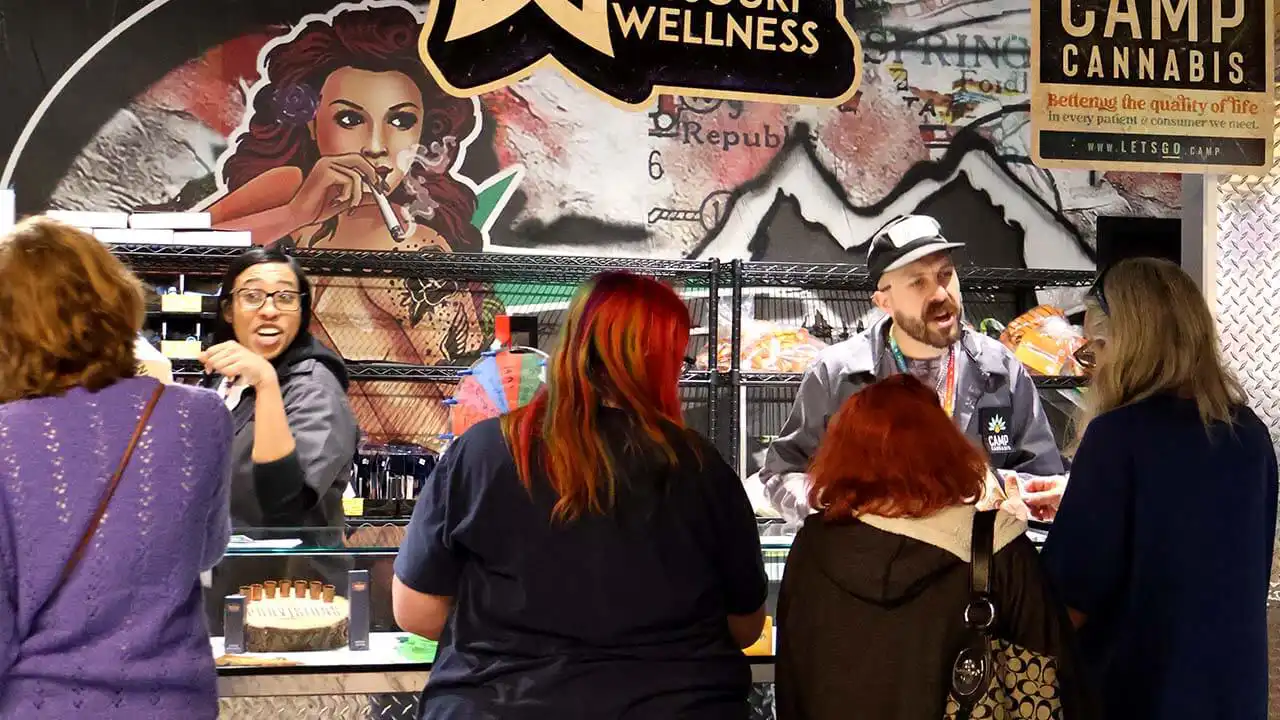
Curious tourists from around the globe are expected to visit cannabis retailers across the continent, where cannabis is legal or decriminalized in some form in every host city.
It’s the first time the World Cup, the world’s biggest sporting event and possibly one of the world’s most significant cultural events, has been hosted in a location where cannabis is legal. And coming after recent tournaments in Qatar and Russia, where drug laws are strict, the shift is significant.
But while cannabis retailers from Los Angeles to New York are expecting a short-term sales boost, the World Cup’s lasting benefit for the global cannabis industry may be a political boon.

“Even if it’s hard to measure the direct impact on sales, events like this introduce a lot of people to what a regulated cannabis market actually looks like,” said Anesha Jones, the general manager at Alta Dispensary in Manhattan.
“Many visitors have never stepped into a licensed dispensary before, so it’s an opportunity to show them that it’s a professional retail experience focused on education, safety and helping people find the right product.”
Are World Cup visitors buying cannabis?
Adult-use cannabis retail stores are legal in eight out of the 16 host cities in the United States, Canada and Mexico. Medical marijuana access is legal in five more (and hemp THC continues to be major business in Texas.)
Only in Mexico is there no retail or dispensary access – but even there, MMJ is legal and adult-use is decriminalized.
With the tournament at its midway point, retailers in some host cities including Los Angeles and Kansas City reported an increase in first-time customers as well as increased foot traffic from locals. That includes Alta, which, in Manhattan’s Nolita neighborhood, is within commuting distance of MetLife Stadium in New Jersey, where the World Cup final will be played on July 15.
At multistate operator NatureMed’s locations in host city Kansas City – where four teams, including defending champion Argentina, have located their base camps – there’s been a noticeable bump in sales, said Myles Mayfield, head of marketing.
“Since the 11th, we’ve seen a consistent bump in first-time customers,” including “an influx of international customers,” he said. (No word on whether that included members of the Argentina or England squads.)
Is cannabis part of the World Cup party?
Other host cities like Los Angeles have also seen a definite uptick in business around the matches. But Adriana Hemans, marketing director at The Artist Tree, a retailer with locations in downtown, said the spike in business isn’t just about tourists.
“At our Koreatown store in LA, people were especially excited around the South Korea versus Mexico game,” she said. “There were two watch parties on that block, and the street actually ended up being shut down.”
“It felt like mostly locals.”
Retailers are also taking advantage of opportunities to educate international and first-time customers about regulated cannabis markets – including how much stronger some legal products may be than illicit-market offerings.
Chris Kuilan, the co-founder of Manhattan-based cannabis retailer Stoops NYC, said he ensured his staffers could educate brand-new cannabis customers from other countries.
“For a lot of international visitors, walking into a legal dispensary in New York may be their first experience seeing cannabis treated like a regulated, professional industry,” he said. “They get to see ID checks, tested products, trained staff, proper labeling.”
“Cannabis is a real business.”
And at least some of those interactions turn to conversations about safe consumption – and warnings that legal cannabis, particularly edibles, may be much stronger than anticipated.
“We spend a lot of time talking through THC percentages, dosing and helping them find something that’s appropriate for their experience level. We also answer a lot of questions about where you can legally consume cannabis in New York,” Alta Dispensary’s Jones said.
How the soccer World Cup could be good for marijuana legalization
Legalization advocates believe the World Cup’s main opportunity is political.
Most international visitors are coming from countries where cannabis is prohibited – including some, such as South Korea, Qatar and Saudi Arabia, with the world’s toughest drug laws.
“Being able to see what a regulated cannabis system looks like really does go a long way toward eliminating some of the stigma and spurring people’s imagination about what it could look like in their own countries,” said Morgan Fox, political director for the National Organization for the Reform of Marijuana Laws (NORML).
Seeing a functional society with legal access could help reduce bias and influence debates about legalization to support possible future international cannabis markets. But that means host jurisdictions and the cannabis industry should be educating visitors about responsible cannabis use, helping protect both consumers and the reputation of regulated markets, he said.
“When you can actually see them firsthand… you can see the security protocols… the professionalism involved, ” he said.
International exposure can have a long-term impact on how regulated markets supply quality, consistency and innovation, said Justin Miller, the senior vice president of marketing at MSO Curaleaf Holdings, which has a presence in Germany as well as the U.S.
“Global events like the World Cup give international visitors the opportunity to experience regulated cannabis markets firsthand where adult use is legal,” he said.
“While it’s difficult to measure the long-term impact, that kind of exposure can help build familiarity with how regulated markets operate and the quality, consistency, and innovation they offer.”
Subscribe to the MJBiz Factbook
Exclusive industry data and analysis to help you make informed business decisions and avoid costly missteps. All the facts, none of the hype.
What you will get:
- Monthly and quarterly updates, with new data & insights
- Financial forecasts + capital investment trends
- State-by-state guide to regulations, taxes & market opportunities
- Annual survey of cannabis businesses
- Consumer insights
- And more!
Why aren’t there cannabis friendly World Cup watch parties?
However, the World Cup is also exposing what some critics say are flaws in existing state frameworks that need correction so that the industry can thrive long after the crowds have gone home.
“The World Cup passed New York’s cannabis industry by, and it exposed exactly how far our regulatory framework still has to go,” said Lauren Rudick, the founder and managing principal of Rudick Law Group, which specializes in cannabis law.
The New York Office of Cannabis Management allows cannabis to be consumed in public and in many places where tobacco is permitted such as private homes. But the state has also yet to regulate cannabis lounges, temporary permits and event activations – such as a cannabis-friendly watch party outside in a summer evening.
That’s all hindered business opportunities during the event – a bungled once-in-a-lifetime chance, she said.
“The opportunity to model responsible, regulated cannabis consumption on a world stage will not come around again anytime soon,” she said.
And while the World Cup has gambling and alcohol sponsors, viewers at home may notice that cannabis is still shut out from advertising on broadcasters – just one of a slew of cannabis-specific restrictions that remain.
Said Rudick: “Major international events don’t just test infrastructure, they test regulation.”