
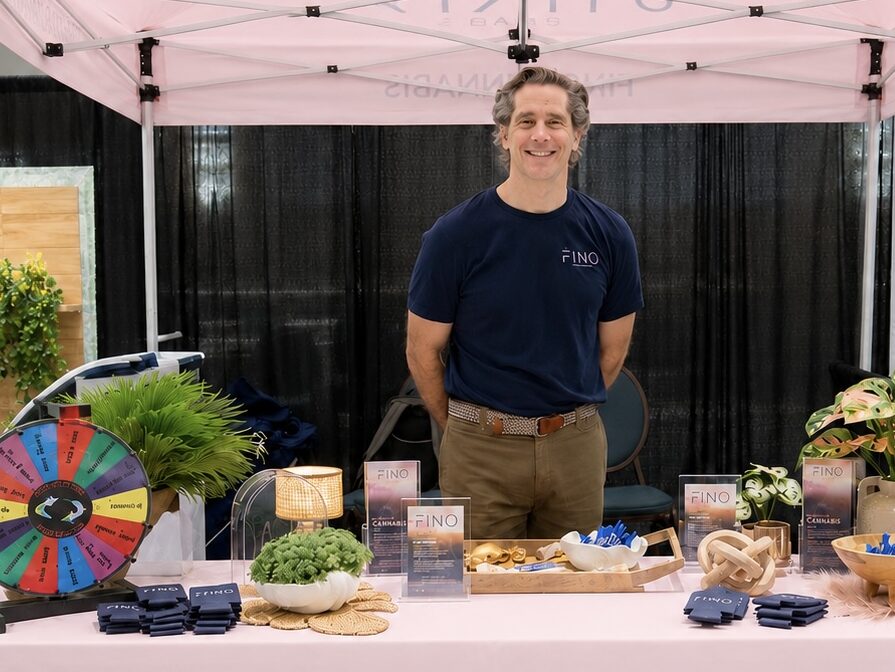
This is part of a regular series of MJBizDaily interviews with major THC industry players. To be considered for an interview, contact editorial@mjbizdaily.com.
Joe Puglise doesn’t mince words about why he chose Florida to launch a medical marijuana company.
When Puglise, a former chief operating officer of Denver-based Medicine Man Technologies, and his core team first mapped out the idea for Fino Cannabis four years ago, Florida kept rising to the top – the numbers made it hard to ignore.
Florida’s medical marijuana sales – $1.89 billion last year, according to Headset – is among the reasons Puglise finds the market attractive. Florida also has 936,488 medical marijuana patients – the highest count of any state in the country. About 4% of Florida residents are registered medical marijuana patients.

“Florida is the most attractive medical marijuana market to do business in,” Puglise told MJBizDaily.
Puglise and his team recognized that when the idea for Fino first started taking shape.
Now it’s real. Fino Cannabis, which acquired Planet 13 Florida’s license in May 2024, opened its first retail location in Clermont in June, with a second location planned for Winter Park in a few months.
What’s the Florida medical marijuana market like?
Beyond the patient numbers, what really grabbed Puglise’s attention was Florida’s market structure.
The state requires vertical integration, meaning every license holder must cultivate, process and distribute their own products from seed to sale. And these permits are limited.
The state launched in 2016 with 24 licenses, but under state law, Florida is supposed to add four new permits for every 100,000 new patients that enter the state registry.
And that expansion has been a long time coming. Newcomers like Fino are just now finally coming online after applying in 2023.
“If you are fortunate enough to hold one of those few licenses, you can open as many retail facilities as your wallet allows,” Puglise said.
Fino deliberately chose Florida to avoid the crowded market in states without license caps like California and m, where hundreds or even thousands of licenses make for stiff competition. Revenue per dispensary in Florida also ranks in the top 10% nationally, Puglise said, which doesn’t hurt.
FINO enters the market as a second mover, a position Puglise likes. In Florida, there are roughly 25 active license holders.
The company’s clean balance sheet and lack of legacy debt are real competitive advantages, Puglise said. The company was privately funded by family offices, friends and family members.
“We might want to open (another) dispensary in the next six months, but if a broker brings us an opportunity in an A-plus location, we have the financial flexibility to act,” Puglise said.
What opportunity is there in Florida medical cannabis?
Puglise thinks Florida’s existing MMJ operators are leaving a lot of patients on the table.
“It’s a medical market that’s largely masquerading as a recreational market,” he said.
Walk into most Florida dispensaries today, Puglise said, and you’ll find shelves stacked with high-THC flower and concentrates – products built around one metric: potency.
But Puglise believes 20% to 50% of potential patients don’t actually want that.
They want to sleep better, ease discomfort or just unwind on a Friday night without getting blitzed. They’re looking for terpene-rich products, full-spectrum vapes that capture the living plant’s profile and live resin made through extractions that preserve terpenes – the kind of lifestyle cannabis you see in mature adult-use markets.
“Those types of products really don’t exist across the board in Florida yet,” he said.
What will Florida medical marijuana patients notice?
The difference starts before a patient even talks to anyone. Puglise describes FINO’s aesthetic as “Tulum casual” – soft lighting, open space, a relaxed vibe that doesn’t feel like a doctor’s office or a Florida beach bar.
The staff approach is deliberate. Wellness associates are trained as consultants, not salespeople. They don’t jump on patients at the door. Some visitors want a full guided walkthrough. Others want to browse the menu and chat at their own pace. FINO gives its team the flexibility to read the room.
And when they do engage, the conversation starts in a different place. Instead of asking what strain patients want or how high a THC percentage they’re looking for, associates ask how a patient wants to feel and work backward from there.
Puglise acknowledges that selling that message in a potency-obsessed market isn’t simple. The answer is balance: Carry what the hardcore high-THC buyer wants while building out an effect-based menu for everyone else.
What are the Florida medical marijuana market expansion opportunities?
FINO tracks patient feedback – both the hard data and the conversations – from the retail floor all the way back through cultivation and production. Puglise sees it as essential to building a menu that reflects what patients want.
On expansion, he’s patient. He isn’t eyeing other states, and he isn’t racing to blanket Florida either.
“We don’t need to open 50 or 100 dispensaries,” he said. “We would much rather open 15 that are profitable and well located with a staff that’s well trained.”
Subscribe to the MJBiz Factbook
Exclusive industry data and analysis to help you make informed business decisions and avoid costly missteps. All the facts, none of the hype.
What you will get:
- Monthly and quarterly updates, with new data & insights
- Financial forecasts + capital investment trends
- State-by-state guide to regulations, taxes & market opportunities
- Annual survey of cannabis businesses
- Consumer insights
- And more!
He’s watched plenty of operators chase scale, take on too much debt and end up stuck with bad leases when the capital markets tightened. FINO enters Florida with none of that baggage, and it plans to stay disciplined.
The competitive strategy is hyperlocal by design. A store in Clermont isn’t going head-to-head with a store in Miami or Jacksonville.
“We’re doing guerrilla warfare in a 5- to 15-mile radius, and I can win at that,” Puglise said.
Margaret Jackson can be reached at margaret.jackson@mjbizdaily.com.