
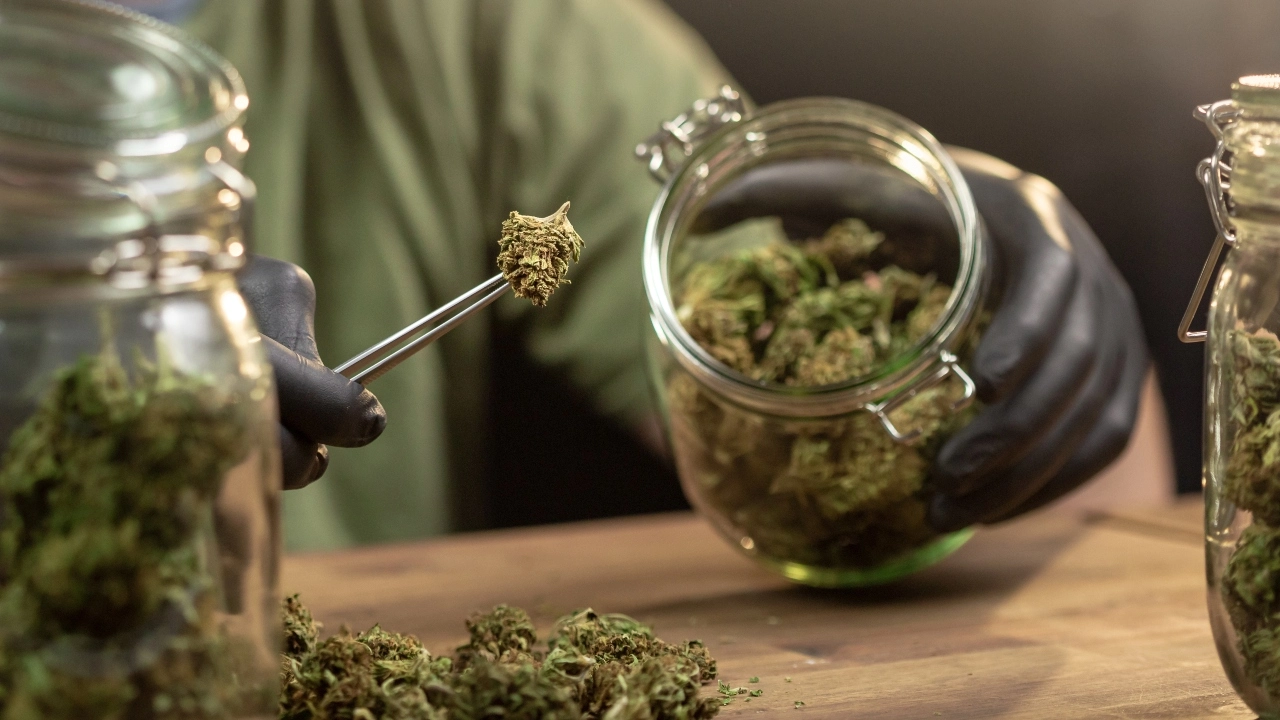
As cannabis retailers frantically ring up purchases on the day before Thanksgiving, one of the industry’s busiest days of the year – but not necessarily most lucrative – shoppers are enjoying a rare vacation from the harsh realities of inflation.
The costs of fuel, food, housing and nearly every other good continue to trend ever upward, with the inflation rate for 2026 hovering around 4%. But cannabis is the exception.

The aggressive discounting that lures cannabis shoppers into marijuana stores on Green Wednesday is cutting already low sticker prices even further.
That trend can be felt all year long, with the year-over-year decline in cannabis sales from 2024 to 2025 accompanying a record number of transactions in many states.

So why are legal cannabis retailers not rising prices to cover their own increasing energy, labor and other bills?
Why aren’t cannabis prices rising with inflation?
Most observers agree that state-by-state, cannabis operators are still digging out from an avalanche of oversupply, created in part by a surfeit of cultivation licenses.
The surplus of unsold product has led to near universal price compression. As wholesale prices plummet, cannabis retailers are selling more units than ever while also reaping in less revenue.
This is felt most keenly around the holidays, when many cannabis retailers – worried about losing customers to a competitor or the illicit market – offer door-busting discounts to lure customer traffic.
Subscribe to the MJBiz Factbook
Exclusive industry data and analysis to help you make informed business decisions and avoid costly missteps. All the facts, none of the hype.
What you will get:
- Monthly and quarterly updates, with new data & insights
- Financial forecasts + capital investment trends
- State-by-state guide to regulations, taxes & market opportunities
- Annual survey of cannabis businesses
- Consumer insights
- And more!
But that’s putting strain on staff and on operations, as yet more units fly out the door without filling the register.
“It’s forced a race to the bottom,” Oregon-based economist Beau Whitney said in an interview with NPR.
“What this is resulting in is great prices for the consumer, they’re spending less and getting the same or more, so that’s good for them on an affordability perspective.”
“But it’s hurting operators.”
What is causing cannabis price compression?
As MJBizDaily has reported, licensed cannabis retailers reported $138.5 million in sales on Green Wednesday last year, up from $132.4 million in 2024, as per Colorado-based analytics platform BDSA. Still, fourth-quarter sales overall are almost static.
Some data suggests the Green Wednesday discounting is merely shifting customers’ buying from one week or another – in other words, moving sales to a brief window when cannabis is even cheaper rather than encouraging an overall boost in sales.
More problematic may be the yearslong decline in prices that has shifted cannabis customers’ expectations.
For years, cannabis buyers would walk into a retailer with a set amount to spend – their cannabis budget.
If they walked in with $60 and found a discounted $40 eighth of flower, they might spend that “extra” $20 on an edible or a vape pen, as the MJBiz Factbook update noted in its basket analysis.
Now, consumers are gravitating towards affordable cannabis goods and pocketing the savings – or, more likely, using the savings on gas, groceries and other essentials their paychecks don’t cover like they used to, Whitney told NPR.
“Behavior changed literally overnight,” he said. “So they’re adjusting the amount that they purchase based on what’s going on in their own personal economy.”
What is the solution to cannabis price compression?
There are signs that the cannabis industry is responding in kind and slowly cutting supply while increasing its ability to meet demand.
There are more stores coming online, with retail licenses posting their biggest quarterly growth in two years, as MJBizDaily reported.
That includes so-called “mature” markets like California, where local rules still ban cannabis retail in much of the vast state.
A recent Reason Foundation study found that there is one cannabis store for every 31,380 residents in that state, compared to one store for 5,186 residents in Oregon.
Meanwhile, cultivation continues to contract. Cultivation operations are usually the first license type to close after a major acquisition.
That could slowly chip away at the oversupply that’s forcing prices down. And there are some signs that it’s working, with sales in California apparently recovered from a slump last year.
Who is responsible for fixing the cannabis market?
Less elastic – and less in operators’ control – are external added pressures such as the 24% wholesale tax in Michigan, a state already hindered by price compression and oversupply, that’s led several retailers to close their doors this year.
Public officials routinely tout major busts, with sheriffs in Butte County, California last week reporting the seizure of 235,000 pounds of illicit market cannabis. At the same time, lawmakers have yet to respond to complaints about taxes like those in Michigan with an across-the-board cut.
And as Whitney told NPR, the years of oversupply coupled with competition on price has created an expectation for cannabis consumers: cheap weed.
And so far, retailers are delivering.
Chris Roberts can be reached at chris.roberts@mjbizdaily.com.