Key points:
- Most cannabis retailers offer no meaningful support for Spanish-speaking customers.
- Curaleaf’s Spanish-language experience includes a bilingual app, website, kiosks, print materials and identifies employees who speak the language.
- Spanish-speaking employees inspired Curaleaf to create the program.
- Cultural nuances matter as much as language.
For many Spanish-speaking medical marijuana patients, walking into a dispensary means hitting a wall – English-only menus, English-only kiosks and no one at the counter who speaks their language.
Cannabis multistate operator Curaleaf is knocking down that wall.
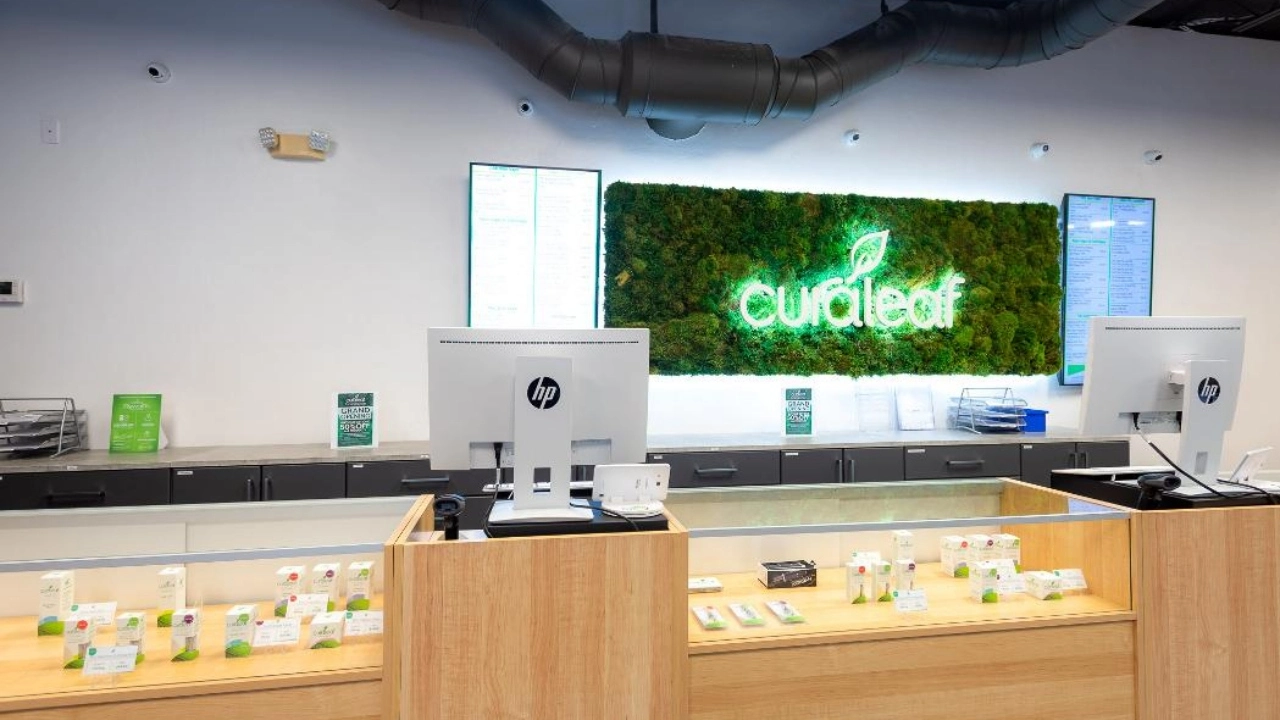
The Connecticut-headquartered company recently rolled out a new Spanish-language experience that covers the whole journey, from a bilingual app and website to kiosks, print materials and staff tags that tell you exactly who can help in Spanish.

How big of a market are cannabis companies ignoring?
About 45 million people in the U.S. speak Spanish at home, with about 18 million of them reporting limited English proficiency, according to the U.S. Census Bureau.
For most cannabis consumers, the experience at marijuana retailers has been English-only, with a translated brochure here or a bilingual employee there. But there’s never been an end-to-end system built for Spanish-speaking patients.
Curaleaf tested the waters for its new program in Florida, home to more than 5 million Spanish-speaking residents, and it’s now live in every state the company serves.
“Everything that we do going forward will be somewhat bilingual in nature,” Curaleaf President Rahul Pinto said.
“In the markets where there is a large presence of Spanish speakers, everyone will have bilingual communications.”
It’s a practice mainstream businesses have followed for decades, Pinto said.
“If you’re thinking about local, how can you be local when you don’t represent the people you sell to,” said Pinto, who spent most of his career in consumer-packaged goods at companies like Albertsons and PepsiCo before joining Curaleaf a year ago.
“If you want to be part of the community, how can you not speak the language?”
How did Curaleaf build the program?
Building the program wasn’t as simple as running English-language content through a translation tool. The program was built to reflect how Spanish-speaking patients communicate and engage with healthcare and retail experiences, Pinto said.
“There are just certain things that are lost in translation,” Pinto said. “We wanted to make sure that the context and the translations were working well,” he said.
For Pinto, it all comes down to respect – the kind big consumer brands figured out decades ago. When a company makes an effort to speak in a customer’s native language, it shows it cares.
“What is more powerful than communicating with someone in their own language?” he said.
That thinking carries onto the sales floor. Budtenders and staff who speak Spanish now wear tags saying so, and Curaleaf coaches them to make sure patients know they can ask questions in Spanish.
That matters most for patients who are strictly there for medical reasons – people who are far more comfortable talking through their needs in their first language, Pinto said.
Why did Curaleaf create the program?
The initiative didn’t come from the top down. It came up from the staff.
Curaleaf operates in some of the country’s biggest Spanish-speaking markets – Arizona, Illinois, New York, New Jersey and Florida – and employs a lot of Spanish-speaking people.
Those employees spoke up, telling company leaders that they didn’t have the tools to serve Spanish-speaking customers well.
“It wasn’t about business strategy,” Pinto said. “Our employees felt it was important. We will always be looking to meet customers where they are, and language is the leading part of that.”
One story sticks with Pinto. He was visiting a recently renovated store in Stamford, Connecticut, when an employee – who had no idea who Pinto was – assumed he was Hispanic and mentioned that a Spanish option was available.
“The pride with which he said it, he had a big smile on his face,” Pinto said. “That’s a huge win for us.”
What’s the Latino community’s reaction?
While Jessica Gonzalez, president of the advocacy group Latino Cannabis Alliance, is glad to see the access expand, she’s not celebrating just yet.
“It isn’t a breakthrough – it’s catching up,” she said. “The data has been there for over a decade. I’m not going to throw a parade for meeting a bar that should have been met years ago.”
The language gap runs deep across the industry, she said.
Conferences skip translation services. Technical assistance programs for new operators rarely get translated. Most dispensaries offer menus, kiosks and educational materials in English only, putting Spanish-speaking patients into the uncomfortable spot of asking for extra help in a setting that’s already intimidating.
“There’s still a harsh stigma around cannabis,” Gonzalez said. “For something they already have a hard time with, the language barrier makes it that much harder.”
Gonzalez knows firsthand. She has family members ask her to pick up products for them “because nobody speaks Spanish,” she said.
Gonzalez points to her own work building out New Jersey’s cannabis training academy, where she pushed to translate the curriculum into the state’s second-most common language.
“If a state government can translate its entire licensing curriculum, an MSO has no excuse,” she said.
Is language the only thing to consider?
Gabriella Collantes, founder of Puerto Rico-based cannabis consulting agency Cannsulting, said campaigns need to lead with education because the war on drugs shaped how many Latino families understand cannabis.
That means explaining product formats, patient registration requirements, physician visits and legal risks in plain language. In emerging medical markets such as Georgia, retailers and brands should work with Spanish-speaking organizations, immigrant-serving groups and local community partners before launching campaigns.
Subscribe to the MJBiz Factbook
Exclusive industry data and analysis to help you make informed business decisions and avoid costly missteps. All the facts, none of the hype.
What you will get:
- Monthly and quarterly updates, with new data & insights
- Financial forecasts + capital investment trends
- State-by-state guide to regulations, taxes & market opportunities
- Annual survey of cannabis businesses
- Consumer insights
- And more!
Having an employee who understands not only the language but also the cultural differences between Spanish-speaking communities is key. People from different countries celebrate holidays in various ways.
For example, Mexico celebrates Día de la Reyes Magos – Three Kings Day – on Jan. 6, while the Dominican Republic honors Our Lady of Altagracia on Jan. 21.
“Not every Spanish-speaking community is the same,” Collantes said. “The language as a whole is important, but where you’re living is equally important.”
Margaret Jackson can be reached at margaret.jackson@mjbizdaily.com.