
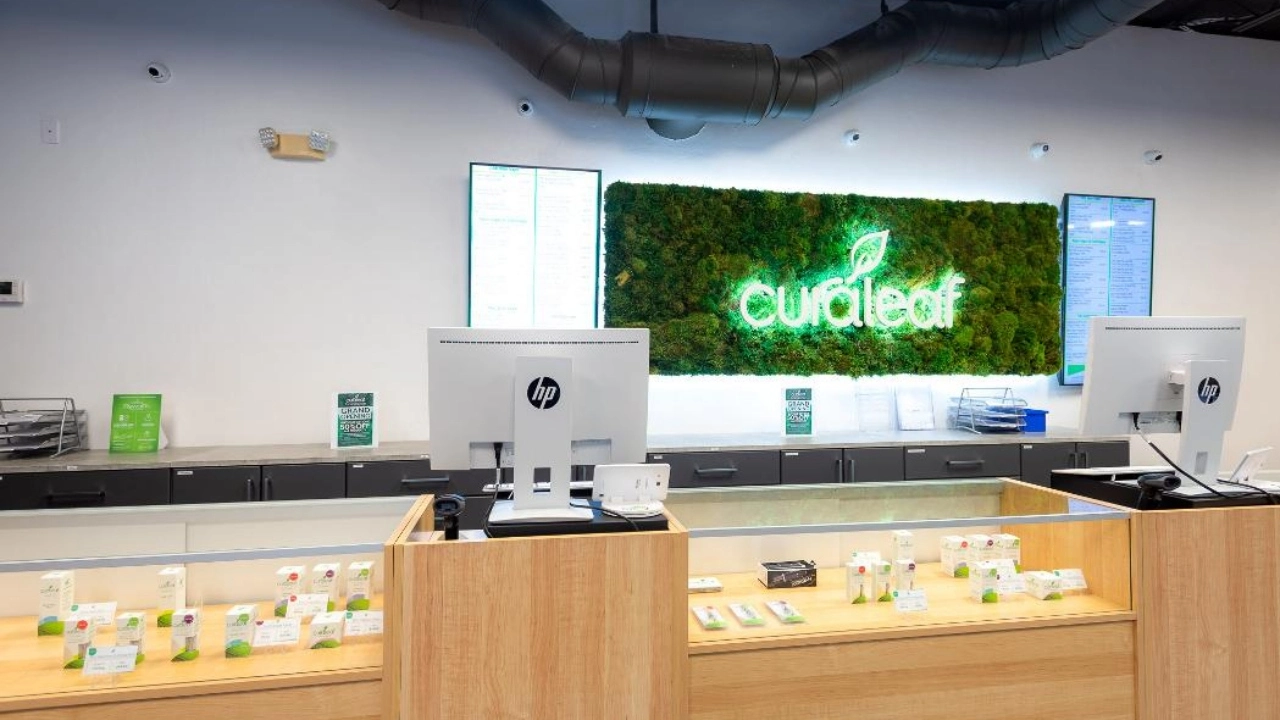
Cannabis multistate operator Curaleaf Holdings is preparing to uplist to a major U.S. stock exchange if “ongoing regulatory developments” allow it, the company said in a statement Tuesday.
In preparation, the company announced it will execute a 1-for-3 reverse stock split expected to take effect on or around June 5, the company said.
While access to markets like the New York Stock Exchange isn’t explicitly guaranteed as part of the April final order reclassifying medical cannabis as a Schedule 3 drug — and may require further action to satisfy the exchanges, which have been historically reluctant to list plant-touching cannabis businesses — Tuesday’s move fulfills at least one requirement.
“Rescheduling of medical cannabis has created a potential pathway toward uplisting to a major U.S. exchange, and we’re now more prepared than ever,” Curaleaf Chairman and CEO Boris Jordan said in a statement.

“These developments should improve access to capital, broaden the investor base and further legitimize cannabis in the public markets.”
Why is Curaleaf doing this now?
Curaleaf said the move followed consultation with major U.S. stock exchanges and was designed to meet their share-price threshold requirements.
Every three existing subordinate voting shares will be consolidated into one new share, reducing Curaleaf’s outstanding subordinate voting shares from about 698.7 million to 232.9 million. The company’s shares will continue to trade on the Toronto Stock Exchange under the ticker CURA and on the OTCQX market under CURLF.
The company also said the consolidation is intended to push its per-share price above limits set by certain retail brokerage firms, while broadening access for institutional investors that have been reluctant to hold cannabis stocks while marijuana is federally illegal.
The TSX has granted conditional approval for the split.
A federal cannabis rescheduling hearing set to begin June 29 and expected to conclude in July and anticipated U.S. Treasury guidance supporting normalization could accelerate the timeline, Jordan said.
What still has to happen?
Despite the company’s bullish framing, an actual U.S. listing is far from guaranteed.
Curaleaf said the split is a preparatory step and that uplisting will only be possible once regulatory changes formally permit cannabis companies to list on major domestic exchanges.
Subscribe to the MJBiz Factbook
Exclusive industry data and analysis to help you make informed business decisions and avoid costly missteps. All the facts, none of the hype.
What you will get:
- Monthly and quarterly updates, with new data & insights
- Financial forecasts + capital investment trends
- State-by-state guide to regulations, taxes & market opportunities
- Annual survey of cannabis businesses
- Consumer insights
- And more!
Curaleaf recently applied for U.S. Drug Enforcement registration for its medical marijuana operations.
A hearing before a DEA administrative law judge on adult-use cannabis’ status begins June 29 and is expected to conclude by July 15.
Until that process is complete and additional regulatory guidance is in place, multistate operators, including Curaleaf, remain locked out of the New York Stock Exchange and the Nasdaq.
A reverse stock split on its own does not change a company’s market capitalization. It consolidates share count and raises the price per share proportionately but does not create new value.