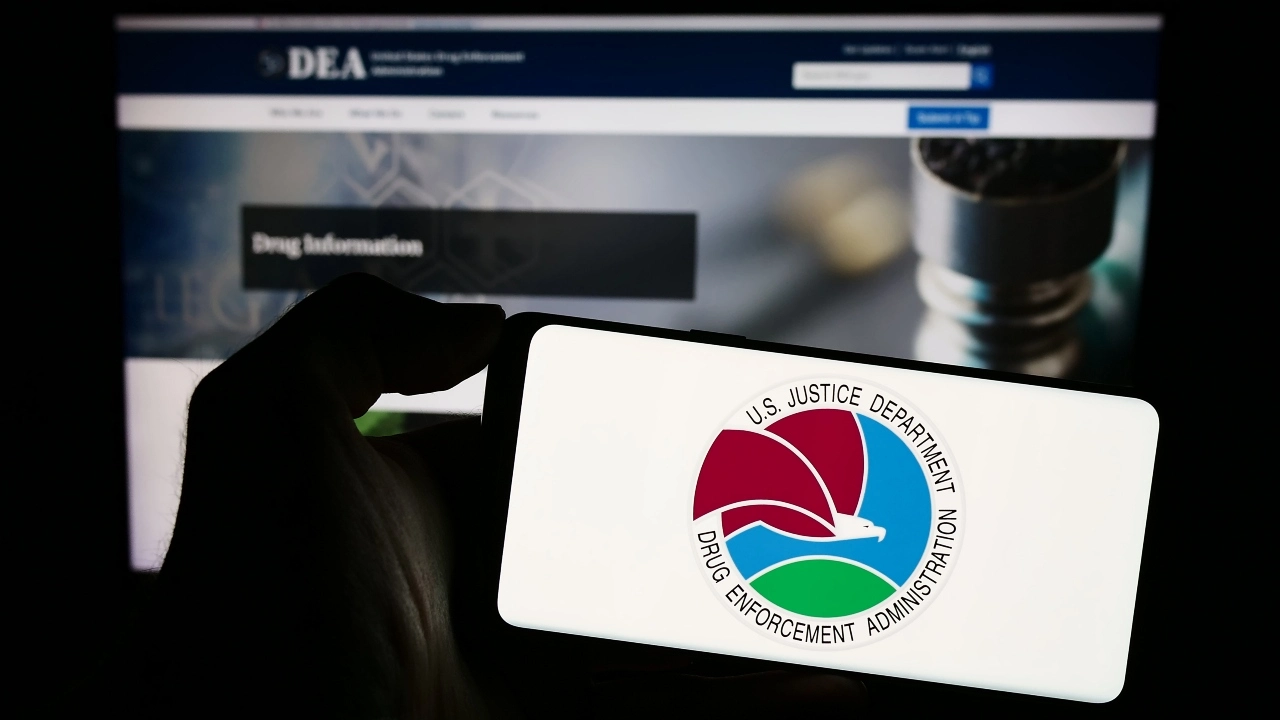
Major cannabis multistate operator Trulieve Cannabis Corp. said Monday that some of its medical marijuana dispensaries are among the more than 900 the U.S. Drug Enforcement Administration has recognized as federally compliant.
Meanwhile, a Minnesota adult-use cannabis retailer said the DEA has rejected its bid for federal recognition, an opportunity presented after the Trump Justice Department’s April final order reclassifying state-regulated medical cannabis as a Schedule 3 drug.
The DEA has received more than 6,000 “timely” applications from medical cannabis dispensaries and manufacturers seeking registration, according to a list the DEA published online.
Other operators in the seven states where the DEA said Friday it has registered “more than 900 dispensaries” told MJBizDaily that they’re still waiting to hear whether they’ll be a part of what Attorney General Todd Blanche called “the first phase” of a new “federal regulatory framework for qualifying medical marijuana businesses.”

What major cannabis multistate operators did the DEA recognize as federally compliant?
Aside from expected federal tax relief, the registrations, which the DEA first announced Friday, are the first major tangible benefit for medical marijuana operators since federal marijuana rescheduling.
On April 23, the Trump administration reclassified state law-compliant medical cannabis as Schedule 3, a designation that recognizes cannabis’ medical benefits. A proposal to reclassify all marijuana as Schedule 3, including adult-use, is still pending.
At the same time, the Justice Department said that compliant operators could register with the DEA during a 60-day window that closed in late June. The DEA has yet to share publicly a list of businesses to which it’s granted registration.
So far, Trulieve – which reorganized to become a medical-only company ahead of its uplisting to the New York Stock Exchange in June – appears to be the only major marijuana MSO to announce its registration.
In a social media post, Trulieve CEO Kim Rivers thanked Blanche and President Trump “for taking historic action on medical cannabis.”
Neither Rivers nor the company indicated in which states the DEA recognized Trulieve dispensaries. A Trulieve spokesperson has not responded to requests for comment from MJBizDaily.
No other major MSO, all of whom serve adult-use customers in several markets, appears to have received registration. Spokespeople for several companies did not respond to MJBizDaily.
Did the DEA reject adult-use cannabis operators?
In its statement Friday, the Justice Department said the DEA is “moving forward” with issuing registration to complying state-licensed medical cannabis operators in seven states – all of which are medical only.
These are:
- Alabama, where just a handful of operators are in business
- Florida, which at $2 billion in annual sales is the country’s largest medical-only market
- South Dakota
- Texas, where MMJ greatly expanded under a law passed last year but where new entrants, including Trulieve, have yet to begin operations
- Virginia, where only five vertically integrated “pharmaceutical processors” are in operation ahead of the launch of adult-use sales next year
- West Virginia, home to a relatively modest market
Of these, Trulieve has operations in West Virginia and Florida. The company also operates in Georgia and Pennsylvania, and has been licensed in Texas.
The registrations offer a limited window into how the DEA plans to adapt to a world in which at least some cannabis business have recognition as legal operators from the federal government – a scenario that for many years seemed beyond reach.
Exactly how cannabis operators will adapt – or what opportunities may be available because of registration – is not yet clear. However, the DEA worried some operators when it said in separate guidance issued Friday that operators have until Nov. 29 to “establish compliant supply chains.”
Anyone that does business with a non-registered operator, such as an adult-use operator, risks rejection or revocation of its registration, the DEA said.

What happens next after DEA registration for cannabis operators?
That would seem to disqualify big operators with adult-use sectors. And the DEA has rejected at least one operator that serves both adult-use and medical customers.
On Friday, Mark Eide, the owner of Minneapolis-based dual-use retailer In-Dispensary, told the Minneapolis Star Tribune that the DEA denied him in part because “non-medical use of marijuana remains prohibited under federal law.”
Minnesota operators can serve both adult-use and medical customers with the same license. Other states, such as California, shuffled the rules to allow operators with adult-use permits to easily obtain medical permits.
Other medical operators are still waiting, with an uncertain timeline.
“We have applied, but we’re still waiting,” Mayan Patel, a licensed pharmacist and chief of operations at Bama Bloom, a licensed cannabis dispensary in Alabama, told MJBizDaily.
While the DEA has not offered “clarity” on when Bama Bloom may know – and has not yet inspected the business “we’re not worried,” Patel added. “We’re standing in compliance.”
Chris Roberts can be reached at chris.roberts@mjbizdaily.com.