
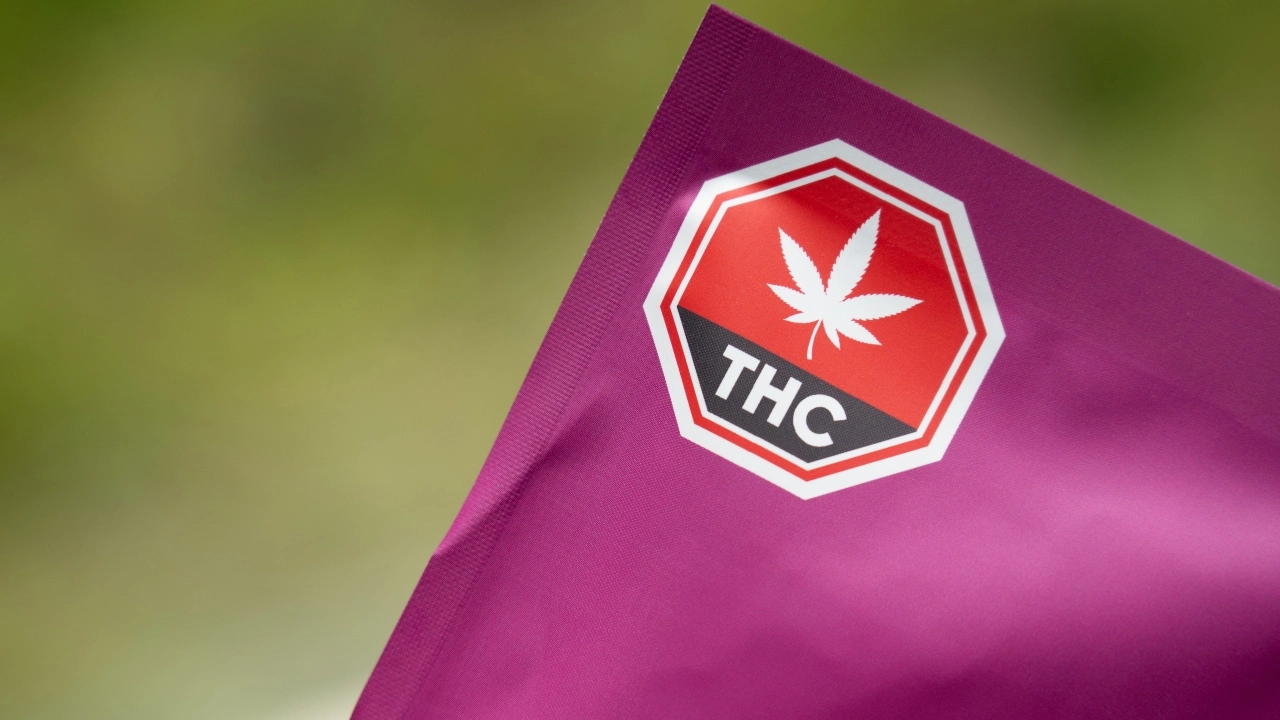
As cannabis flower, edibles and other finished products sit on store shelves, a thorny question follows: When does marijuana “expire,” and who decides?
With no national standard, rules vary widely.
Some states require expiration dates, others call for “best used by” dates. Many default to a blanket one-year mark that doesn’t account for how flower, edibles and beverages age, critics say. And some states allow operators to set their own standards — if they can find the justification.
This invites risk, observers contacted for this article said. For operators, getting it wrong can trigger a recall, destroy inventory and erode brand trust, as Colorado-based Keef Brands discovered earlier this year when state regulators pulled its beverages from retail shelves.

Why are cannabis labels important?
Cannabis labeling serves two purposes: protecting consumer safety and giving buyers a clear picture of what they’re purchasing.
Nearly every market requires labels to include:
- THC and CBD levels clearly stated so consumers can make informed decisions about potency and dosage
- Batch numbers to support traceability and accountability throughout the supply chain
- Company information, including the manufacturer or distributor, so there’s a clear point of contact if questions or concerns arise
But when it comes to determining how long a product lasts, state rules are inconsistent.
What are the rules for labeling?
For example, Louisiana, Maine and Maryland require expiration dates, while Alabama requires a “best used by” date. Other states allow cannabis operators to set their own expiration dates – provided they can justify the shelf life with a study.
Flower, concentrates, beverages and edibles each behave differently, yet many states apply a blanket one-year date, Darwin Millard, technical director for St. Louis-based compliance service Cannabis Safety & Quality (CSQ), told MJBizDaily.
According to Millard, operators should conduct shelf-life stability testing to determine the date the product is no longer “up to par.”
“In a lot of states, a default date of one year is typically applied – that doesn’t help anybody,” Millard said.
“Flower is not going to be good in a year,” he added. “You lose terpenes and the quality of flower goes down as you lose water content.”
Millard suggested flower could be treated more like produce, with a “best-before” or “packaged-on” date rather than a hard expiration.
For higher-risk products like beverages, which are less shelf stable than other edibles, true expiration dates make sense. Lower-risk, low-water products may warrant only a best-before date, Millard said.
What does Colorado require?
Colorado’s State Licensing Authority first adopted expiration date requirements for vaporizer delivery devices and pressurized metered-dose inhalers in 2020, said Allison Robinette, director of policy and regulatory affairs for the MED and the Natural Medicine Division.
The rules took effect on July 1, 2022. Use-by date requirements for all other product types were adopted in 2022 and took effect on Jan. 1, 2024.
“Marijuana approaching the expiration should not fail testing if the use-by date is determined correctly,” Robinette said.
The agency requires different methods by product type. Vaporizer makers must conduct shelf-stability studies to establish an expiration date, while other marijuana products must carry a use-by date set through shelf-stability studies.
If they can’t justify a longer shelf life, a default nine-month date applies, Westword reported.
Stevenson said the most common mistake is assigning a date to satisfy a regulator without running a long-term stability study in the final packaging.
If a retest shows the product missed its label claim, a recall can follow.
Why do cannabis products need expiration dates?
Because THC is unstable, the central question for any cannabis company is simple: when the product is sold, is it still meeting the same claims that are on the label?
The greatest threat is oxidation. As delta-9 THC oxidizes, it converts to CBN, which has a sedative effect.
That explains the common report of older cannabis simply making people tired, said Austin Stevenson, chief revenue officer of Act Lab, a Lansing, Michigan-based licensed testing facility.
“Oxidation exposure increases the longer it sits on the shelf,” he added.
Oxidation is also an issue for THC-infused beverages. Operators can combat oxidation at the production line by using the nitrogen push used in making mainstream sodas and seltzers, Stevenson said.
Some manufacturers even use nitrogen to seal flower, which makes the product more brittle but protects the cannabinoids.
What makes THC beverages so difficult to predict?
Beverages are the biggest challenge because manufacturers are dealing with emulsions and liquids, Erik Knutson, co-founder of Colorado-based beverage maker Keef Brands, told MJBizDaily.
The emulsion shifts over time, affecting potency, quality and taste.
Late last year, Keef had to pull its beverages from store shelves after the state’s Marijuana Enforcement Division (MED) randomly tested products that were nearing their expiration dates.
“They did shelf testing with varying results with what came back for potency change,” Keef co-founder Kelly Knutson said. “Potency does change over time, but it should stay within the allowable 15% window.”
In Colorado, products must stay within a window of plus or minus 15% of the potency the label claims as of the date of manufacture. A product can still be sold if it’s past its use-by date as long as the customer is informed.
Keef started with the standard nine months from manufacture, then dropped its beverages to six months.
Subscribe to the MJBiz Factbook
Exclusive industry data and analysis to help you make informed business decisions and avoid costly missteps. All the facts, none of the hype.
What you will get:
- Monthly and quarterly updates, with new data & insights
- Financial forecasts + capital investment trends
- State-by-state guide to regulations, taxes & market opportunities
- Annual survey of cannabis businesses
- Consumer insights
- And more!
What should cannabis expiration dates look like?
Millard is a volunteer with ASTM International, an organization that develops technical standards for a range of products.
ASTM has developed labeling standards that could be adopted to create a uniform standard for cannabis products. Published in 2023, the ASTM D8449 lays out distinct date types: beyond-use, best-before, use-by, durable-life and expiration dates, plus a packaging date.
The standard sets clear thresholds:
- A best-before date applies when a product can be reasonably assured of a shelf life longer than 90 days.
- A use-by date applies at 90 days or less.
- An expiration date may be used only when analytical testing data certifies the shelf-life determination.
“The legal burden for an expiration date is substantially higher than a beyond-use date,” Millard said.
Can federal marijuana rescheduling solve cannabis’ labeling woes?
Imposing more reasonable rules – or at least eliminating the state-by-state inconsistency – could happen if federal marijuana rescheduling leads to a federal agency such as the U.S. Food and Drug Administration taking over labeling requirements from the states
Many expect reclassifying marijuana as a Schedule 3 drug to drive greater standardization, bringing FDA-style testing expectations to a fragmented market.
“Rescheduling should impact it in a positive way,” Act Labs’ Stevenson said.
“It would bring more standardization and regulation around what specific tests or studies need to be done.”
Margaret Jackson can be reached at margaret.jackson@mjbizdaily.com.