
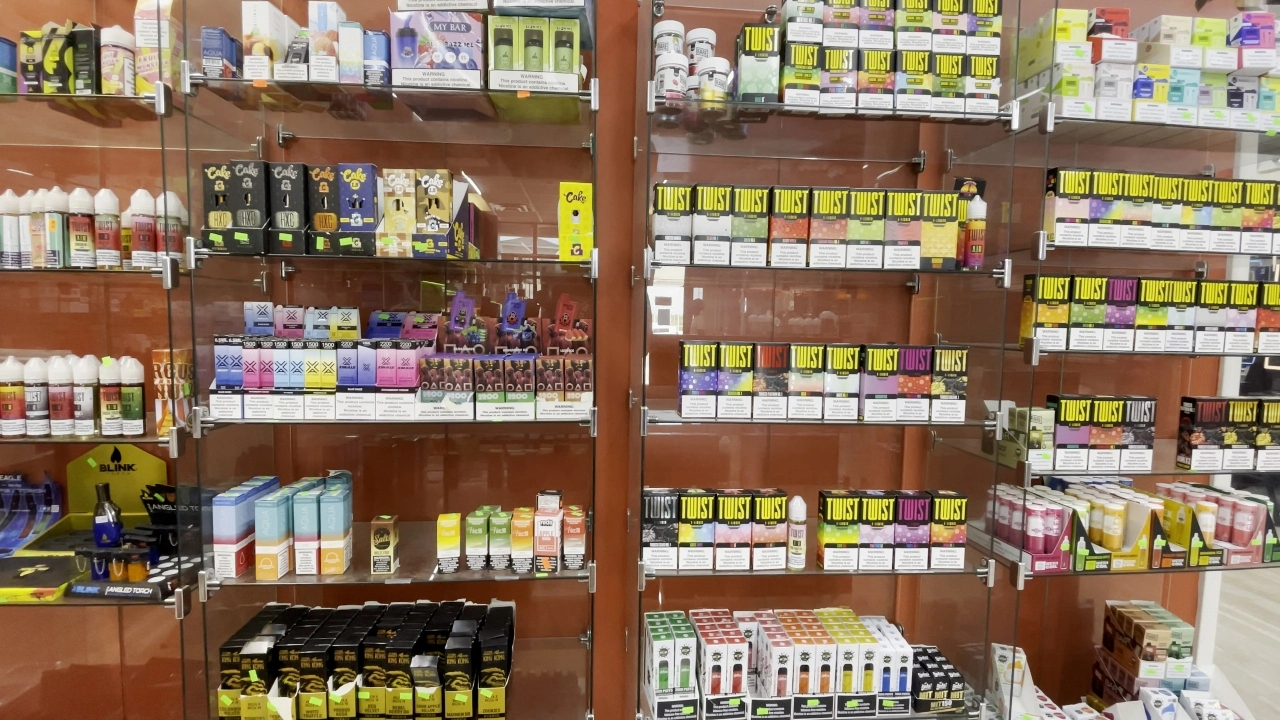
Four Republican U.S. senators in a letter Tuesday asked the federal Justice Department to “investigate the growing role of Chinese transnational criminal organizations in America’s cannabis and intoxicating-hemp markets.”
But the letter also sent a signal about Republican attitudes around the looming Dec. 11 redefinition of hemp that critics say will render most of the existing hemp cannabinoid market illegal.
“Leaving the loophole unaddressed,” the senators told Attorney General Todd Blanche, “would give these networks additional time to flood American commerce with synthetic products.”
The signatories are:

- U.S. Sen. Tom Cotton of Arkansas
- U.S. Sen. Ted Budd of North Carolina
- U.S. Sen. Pete Ricketts of Nebraska
- U.S. Sen. Susan Collins of Maine
Are ‘Chinese nationals’ taking over the cannabis industry?
Alarmism over alleged Chinese involvement in cannabis, supposedly done on orders from Chinese Communist Party officials in Beijing, has been a right-wing talking point for years.
Maine officials in 2024 requested DOJ “support” for local law enforcement after “Chinese nationals” were implicated a string of illicit cannabis arrests.
But more recently, scrutiny has extended to legal cannabis industry operations.
In July, two employees of a licensed medical marijuana grow in Oklahoma were indicted on federal charges for allegedly smuggling in forty pounds of pesticides from China.
Those charges came amid heightened scrutiny of Oklahoma’s medical marijuana industry and years of allegations from public officials, including Gov. Kevin Stitt, that the state’s industry is “plagued by foreign criminal interests.”
Stitt and others have specifically called out Chinese nationals and the Chinese “Communist Party” for allegedly corrupting Oklahoma’s legal medical cannabis market.
And in California, a worker with a Chinese name died after contact with illegal foreign pesticides at a licensed cannabis cultivation operation in Lake County, as MJBizDaily reported.
How much hemp comes from China?
Some legal cannabis industry operators and advocates have also alleged that some of the intoxicating hemp products on the market originate in China, the world’s largest hemp producer.
China does supply some of the hemp imported into the U.S., according to the U.S. Department of Agriculture’s Weekly Hemp Report, last updated in September 2025.
However, at roughly 3 million kilograms imported into the U.S. compared to about 400,000 kilograms respectively through the end of 2025, Canada supplied much more hemp oil than China, according to the USDA.

Will Congress extend the federal hemp ban again?
But in their letter, the senators indicated that the Chinese threat may be enough for them to discard any notion of a hemp ban extension or other carveout for products such as hemp-derived THC beverages.
“Congress has recognized the need to address vulnerabilities in this market, including closing gaps in the 2018 Farm Bill that allowed unregulated intoxicating hemp and THC products to proliferate,” the letter read in part.
“Leaving the loophole unaddressed would give these networks additional time to flood American commerce with synthetic products… and expose consumers to unregulated, dangerous synthetic products masquerading as legal hemp.”
Concerns around synthetically converted hemp extend to the legal cannabis industry.
A Colorado manufacturer recently recalled vaporizer products after third-party lab testing discovered a cancer-causing solvent associated with the conversion of hemp-derived CBD into THC.