
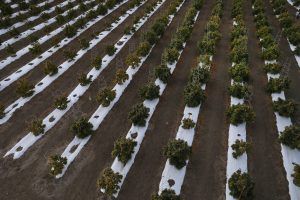
(This is an abridged version of a story that appears in the October issue of Marijuana Business Magazine.)
By Margaret Jackson
Farmers growing hemp are increasingly contemplating a move into marijuana, given the similarities between the plants and the meteoric rise in demand for medical and recreational cannabis across the country.
The transition isn’t as easy as it might appear, though.

If a farmer is growing hemp for CBD – versus fiber or seed – there’s not as steep a learning curve to begin growing marijuana. But there are still differences in what it takes to grow a successful crop, and regulations governing hemp and marijuana are vastly different and vary significantly by state.
“They’re two different components and are treated differently under the law,” said Michael Bronstein, co-founder of the American Trade Association for Cannabis and Hemp.“You can’t just move one license over to another. There are legal barriers in certain states. Many states have industrial hemp pilot programs. Some have MMJ laws and others do not.”
Navigating the rules
More than 30 states allow hemp cultivation under provisions spelled out in the federal 2014 Farm Bill. The law authorized production for research purposes and select pilot programs.
A handful of states allow farmers to grow both hemp and marijuana, including California, Washington and Maine.
Different state agencies regulate cannabis and hemp. In Colorado, for example, the state’s Department of Agriculture regulates hemp while the Department of Revenue’s Marijuana Enforcement Division oversees cannabis.
The laws and regulations for growing cannabis also vary greatly by state – and even municipality. Some towns, for example, may ban recreational or medical cannabis in a state where the hemp plant is legal.
“Follow the regulatory guidelines that have been published,” Bronstein said. “Follow the application guidelines, and get yourself familiar with the licensing process in general.”
Similarly, be aware that some areas have regulations that cross over between cannabis and hemp.
In Oregon, for example, hemp and marijuana can be grown on the same property as long as there are separate licenses. But in Pueblo County, in southern Colorado, a hemp crop must be at least 5 miles from a farm that grows marijuana for its THC content, given concerns that the two plants may cross-pollinate.
“Hemp farms grow males,” said Michael “Caddy” Cadwell, former director of sales for Los Sueños Farms, a Pueblo County cultivator. “The pollen gets in the air and saturates the female plants. You don’t want males around females. They don’t mix very well.”
Getting started
The ease of transitioning from growing hemp to marijuana depends largely on what a cultivator’s legacy hemp crop is being produced for.
If a cultivator is growing hemp for CBD, the crops are virtually identical – and should be nurtured in the same way, said Kyle Wagner, co-founder of Queen Bee Bliss, a Sherwood, Oregon-based hemp farm.
Wagner, who relocated from Colorado to Oregon to start the business, studied and trained in Colorado to go into the recreational marijuana industry. But she ultimately opted to become a hemp farmer. Still, Wagner is also growing several medical marijuana plants; she battled cancer twice and has an MMJ card.
Given the similarity between marijuana and hemp grown for CBD, Wagner is frustrated by the misinformation that surrounds the latter.
For example, it’s widely believed that all hemp plants are male and marijuana plants are female. But Wagner spends a lot of time pulling any male plants she finds out of her hemp crop so they can’t pollinate the females.
“With marijuana, it’s possible to find far more feminized seeds than it is with hemp, and thus with hemp we have to sex out the males once they start the pre-flower phase,” she said.
Soil and planting
As with hemp grown for CBD, high-quality soil is critical to ensure a healthy marijuana crop, Wagner said.
Good soil is dark brown in color, compacts when it’s squeezed and easily breaks apart again with a small amount of pressure. The soil should be rich in organic matter with a slightly acidic pH of 5.5 to 7.
Cannabis likes a slightly acidic environment at the roots, which is what makes it thrive outdoors. Soil also should be well-drained because waterlogged cannabis can lead to bud rot.
Wagner augments her soil with kelp, blood meal and garden-grade lime before dropping the transplants into the ground – the same technique that can applied to cannabis.
Before transplanting her hemp crop, she picks her favorite plants and put them in the greenhouse so she can clone the mothers for future crops – again, the same can be done for marijuana.
In addition to such similarities, Wagner said a benefit of growing marijuana is the plant effectively telegraphs its condition. So it’s easier to nurture the plants.
“The great thing about cannabis is that it tells you what it needs,” she said. “What kind of bugs, whether it’s dehydrated – it shows itself amazingly readily.”
To sign up for our weekly hemp business newsletter, click here.