
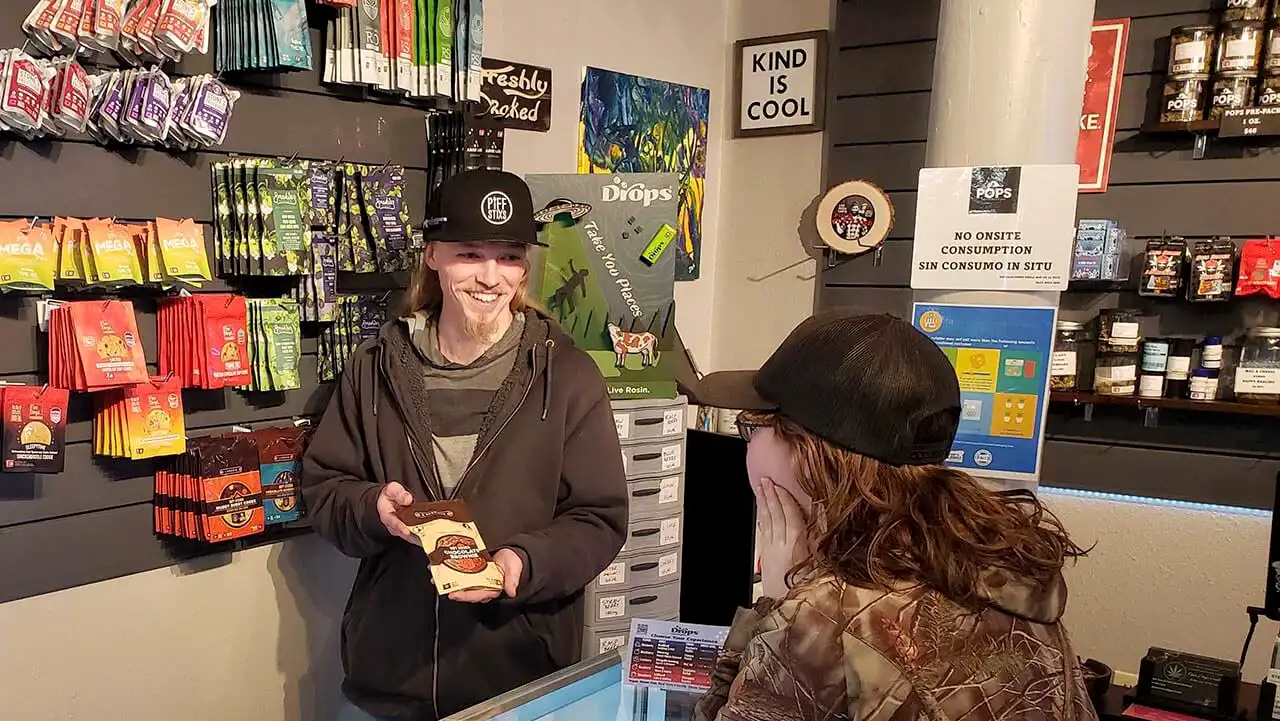
Customers entering the The Daily Green, a cannabis store in New York City’s Times Square, were greeted with an unexpected surprise on December 1 last year: free bagels, a product launch and an in-store meeting with brand representatives.
Behind all the activity is a new philosophy shared by successful retailers across the country: offering cannabis for sale isn’t enough.To boost retention, cannabis stores need to make buying weed an experience.
“When our guests associate The Daily Green with community, education, and memorable moments, they keep coming back,” Chris Thompson, Daily Green’s director of operations and marketing, told MJBizDaily.
As cannabis markets mature, successful retailers are evolving from offering a transactional atmosphere to providing an experience, operators interviewed for this article said. To offer experiential cannabis sales, store owners are adding events, lounges where legal, and embracing immersive design to build loyalty, increase spend and drive traffic.

And operators say these strategies are already delivering results like more foot traffic, longer dwell times, and bigger baskets.
What is ‘experiential retail’ for cannabis operators?
Retailers focus on their stores’ atmosphere and layout, and ensure visitors have interaction beyond the point-of-sale.
When The Daily Green opened in August of 2025, customers saw wood paneling, glass product cases and magazine-style displays.
A separate second-floor space is dedicated to brand showcases, product launches, and educational events. These include meet and greets with brand founders and exclusive product launches like the recent MFNY BagelHole pre-roll event.
Their share of return customers has climbed from 3-4% at launch to more than 20% after 6 months of these events and experiences, Thompson claimed.
“Experiential retail isn’t a pivot for us,” he added. “It’s been part of our vision from day one.”
Cannabis retail: going beyond simply buying weed
Befitting its customer base of tourists in town seeking thrills, Planet 13 in Las Vegas offers several different kinds of experiences, including a consumption lounge, DAZED. It features VIP booths. They also host comedy nights and, with the market power of celebrity cannabis brands, offer activations like a Mike Tyson VIP room experience.
“The model has evolved toward creating destinations rather than just dispensaries,” said Christopher Stickney, retail operations coordinator at Planet 13.
Stores do well if they can “bring people in for a reason beyond simply buying cannabis,” he added.
What does experiential retail cost a cannabis operator?
However, experiences all come with more complexity and cost.
Operators that are offering up events need additional staff and planning, plus coordination across different areas like compliance and security. They also need to coordinate with brand partners in a highly regulated environment.
The costs can add up quickly, and they can also include food and catering, decorations, and branded materials, plus DJs. That means there needs to be coordination with internal teams, vendors, brand partners, and outside collaborators.
Lounges and events can also struggle with regulatory compliance in highly controlled cannabis areas. Planet 13 needs to work within a highly regulated framework to make sure their lounges and events line up. On the brand side of that, governments and their constraints are just one piece of the puzzle.
Said Stickney: “Operationally it also requires a lot of coordination between retail, security, compliance, marketing, and brand partners.
“The experience has to feel seamless to the guest, but behind the scenes there’s a lot of planning involved.”
Culture is the Competitive Edge
When compliance becomes tricky, some operators are pushing the limits of this type of retail by leaning heavily on culture.
Tiffany Chin, the CEO of Death Row Records Cannabis, Snoop Dogg’s cannabis brand, said the stores they design are lifestyle hubs and not retail outlets.
“Retail often becomes a flat, predictable race to the bottom on price and THC percentages,” she said.
“We aren’t building dispensaries; we’re building cultural landmarks,” she said.
Stores in Los Angeles and Amsterdam run on an “always-on” model that includes unexpected sets from DJs and celebrity drop-ins. Behind the noise is a deliberate business strategy: increasing dwell time to increase revenue with arcade games, music, and features like cultural artifacts.
As the market matures, cannabis will take a page from other lifestyle industries and move towards a combination of hospitality, entertainment, and cultural destinations.
Said Chin: “Cannabis is the product, but the culture is the draw.”
For feedback on this story, email editorial@mjbizdaily.com