
Key points in this article:
- A U.S. Drug Enforcement Administration administrative law judge will hear arguments for and against moving “marijuana,” as defined under U.S. law, to Schedule 3 of the Controlled Substances Act (CSA) in a hearing scheduled to begin Monday.
- State-licensed medical cannabis is already reclassified as a Schedule 3 drug. Currently, adult-use marijuana is still Schedule 1.
- The DEA judge can recommend marijuana be reclassified as Schedule 3, recommend reclassification to Schedule 2 instead or rule in favor of the status quo.
- But the Justice Department and DEA are free to ignore the recommendation entirely. And there is no set deadline to act.
Neither the cannabis industry nor drug-policy reform advocates will have a voice in the room when hearings on marijuana’s status under federal law begin in the Washington, D.C., area on Monday.
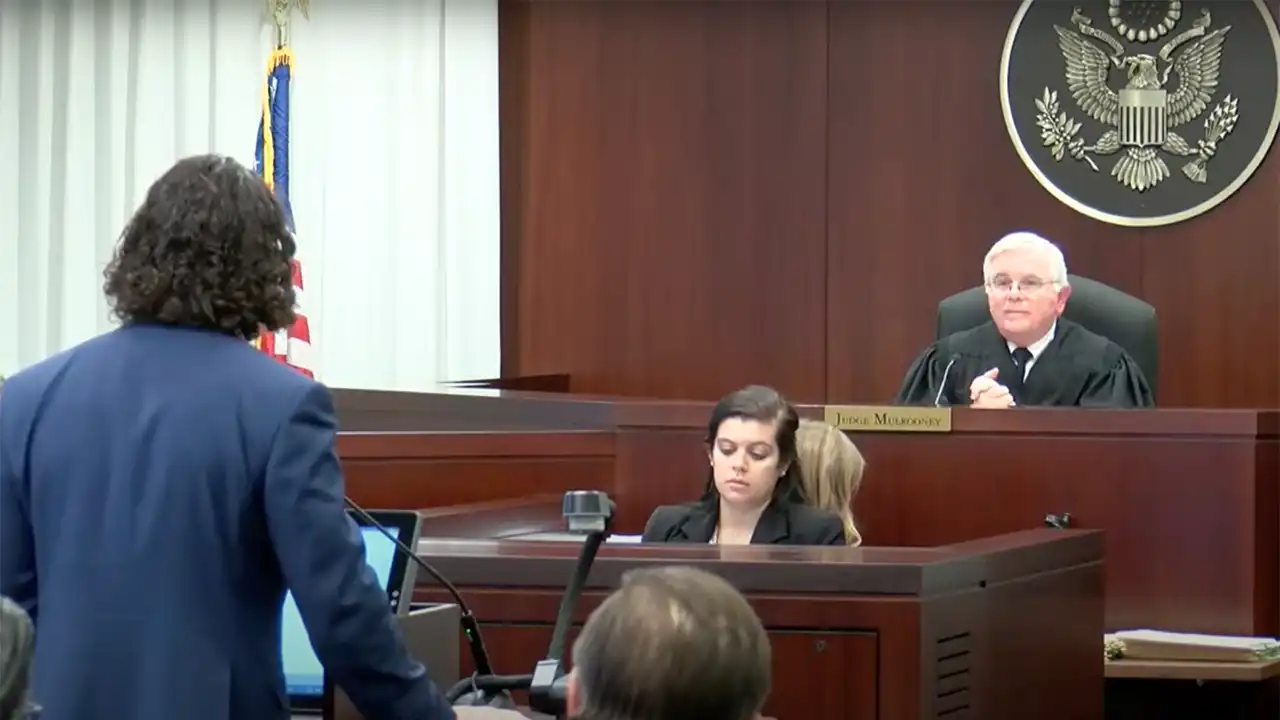
Instead, U.S. Drug Enforcement Administration Chief Administrative Law Judge Derek Julius will hear arguments for and against the Biden administration-era proposal to relax federal restrictions on “marijuana”(as defined under federal law) from the Trump Justice Department.

And whatever evidence and testimony that seven opponents of cannabis reform selected for participation present, both those arguments and Julius’ eventual decision could have little bearing on what happens next, observers of the process told MJBizDaily.
“There will not be a ‘verdict’ at the end like you would see in a trial,” Riana Durrett, a law professor and director of the Cannabis Policy Institute at the University of Las Vegas, Nevada, told MJBizDaily.
“There should eventually be an order from an administrative law judge, although that could get stalled for several reasons, as we saw under the Biden administration, and unfortunately, we may not get all the way through the process in the near future.”
Can the DEA fully deschedule adult-use marijuana?
Both the scope of the hearing and what evidence the participants can present are narrowly restricted by both federal law and by Julius’ decisions.
Set after the federal Justice Department reclassified state-licensed medical cannabis as a Schedule 3 drug under the Controlled Substances Act, the hearing will consider whether to finalize the Biden-era recommendation to reclassify all marijuana as Schedule 3.
That’s a designation that would recognize adult-use cannabis as a medicine.
“The narrow issue in this matter is whether the remainder of marijuana, as defined in the CSA, should be transferred from its current place on schedule I of the list of controlled substances to schedule III,” as Julius wrote in a June 18 preliminary order.
“The Government, as the proponent of the proposed rule, has the burden of proof,” the order adds.
Federal law defines “marijuana” as “all parts of the plant Cannabis sativa L., whether growing or not; the seeds thereof; the resin extracted from any part of such plant; and every compound, manufacture, salt, derivative, mixture, or preparation of such plant, its seeds or resin.”
Hemp, as redefined last fall, is excluded.
What will the DEA hear from marijuana rescheduling foes?
As MJBizDaily reported last week, the DEA last week selected seven anti-cannabis individuals or organizations – including government representatives from four states, two of which have legal medical cannabis – who met the federal definition of an “interested party.”
Under the federal Administrative Procedures Act, an interested party is “any person adversely affected or aggrieved by any rule or proposed rule.”
Each of the seven interested parties “will have an assigned day on which they will present their case-in-chief,” Julius’ order adds.
On that day, they’ll be able to call up to two witnesses, who will be allowed to testify for no more than four hours total.
Both the opponents and the government will be allowed to cross-examine each others’ witnesses for no more than an hour.
Parties must submit a prehearing statement summarizing their argument by Wednesday, and their exhibits of evidence by Thursday.
Public access is also limited. As of now, the hearings will not be broadcast, online or otherwise.
When will cannabis be fully rescheduled?
Though the hearings are scheduled to conclude July 15, Julius is not required to issue a ruling by any specific deadline.
And as with prior hearings suspended indefinitely on the eve of Trump’s second inauguration and later canceled by Acting Attorney General Todd Blanche, Julius’ final ruling is nonbinding.
That means the DEA and Justice Department are free to follow or ignore it, legal experts said.
As for his ruling, that’s also limited, said Jason Adelstone, a Denver-based attorney with national law firm Harris Sliwoski.
Julius can recommend marijuana be reclassified as a Schedule 3 drug, following the August 2023 recommendation from the Department of Health and Human Services. Or he could recommend it be reclassified as Schedule 2, a designation that would complicate matters for the existing $28 billion legal industry.
He could also recommend that it stay Schedule 1.
Likewise, the DEA is free to do as it pleases with Julius’ ruling. Once a final rule is issued, there’s a 30-day window for opponents to bring legal challenges, as they’ve done with the April 23 final order rescheduling medical cannabis.
“There are two parties under no deadline: the ALJ and the DEA,” Adelstone said. “The ALJ can take as long as he likes to make a determination, and the DEA can take as much time as they want after they’ve received it.”
And as with medical cannabis rescheduling, further litigation is a near-guarantee.
“That’s where I’m concerned,” Adelstone added.
For cannabis reform supporters, that means one major objective for the hearings is ensuring that the process is sound so that a judge in a future lawsuit doesn’t cancel everything out. And they’re shut out of direct participation.
Subscribe to the MJBiz Factbook
Exclusive industry data and analysis to help you make informed business decisions and avoid costly missteps. All the facts, none of the hype.
What you will get:
- Monthly and quarterly updates, with new data & insights
- Financial forecasts + capital investment trends
- State-by-state guide to regulations, taxes & market opportunities
- Annual survey of cannabis businesses
- Consumer insights
- And more!
What happens after the DEA marijuana rescheduling hearing?
Many more questions will remain if adult-use cannabis is rescheduled.
If all marijuana becomes Schedule 3, it’s unclear whether the DEA will offer adult-use operators the same ability to register with the organization as is extended to medical operators.
Though statute exempts purveyors of Schedule 3 drugs from the tax restrictions under Internal Revenue Code 280E, all operators are still waiting for promised guidance from the Treasury Department and Internal Revenue Service.
And continuing a theme, state and federal law will continue to be inconsistent. State regulators have asked the DEA for clarity and have received little to none, MJBizDaily has learned.
That’s leaving many operators waiting for more movement before their businesses fundamentally change.
“For example, the rescheduling order legalizes international trade, but you don’t see that happening today, and you will continue to see delays while the federal government and cannabis businesses put the pieces in place,” UNLV’s Durrett said.
“Although it is exciting to see movement toward rescheduling at the federal level, I don’t think people should expect significant or immediate shifts in cannabis legalization this summer.”
Chris Roberts can be reached at chris.roberts@mjbizdaily.com.