Brash advertisements promoting age-restricted alcohol and online gambling products and services are omnipresent in American professional sports for audiences of all ages, whether at the stadium or watching at home.
With few exceptions, the legal cannabis industry remains shut out from these marketing and branding opportunities.
And most cannabis operators and brands won’t likely be able to entertain partnerships or endorsements in top-level pro sports before more advances in federal reform accompany relaxed state-level advertising laws, operators and marketing experts told MJBizDaily.
For risk-adverse broadcasters, federal cannabis rescheduling may need to extend to adult-use marijuana before a cannabis brand appears in between a betting parlor and a beer logo.

“Every broadcast partner is a federal licensee with a renewal to protect,” said Ricardo Baca, the founder and CEO of Denver, Colorado-based cannabis-focused public relations firm Grasslands.
At the same time, some bold franchises and cannabis outfits brands are quietly blazing a trail, with hemp-centered companies making inroads with Major League Baseball and college football.
“This work is happening – it’s being done,” Baca added.
But should a federal ban on most hemp-derived products take effect as scheduled this November, these complications will extend to hemp-derived THC beverage and CBD companies as well, observers warn.
Did a professional baseball team rebrand as a cannabis company for a day?
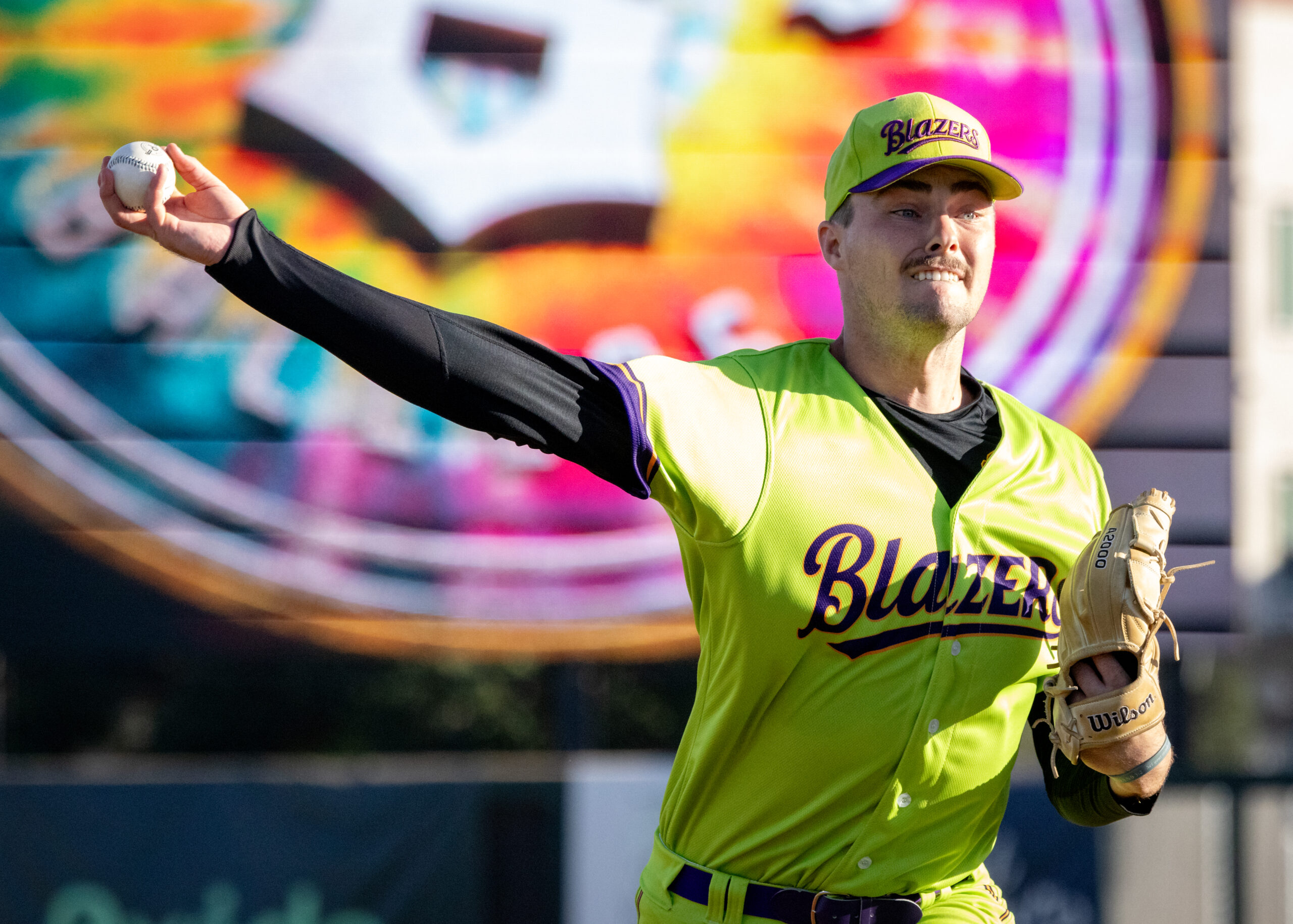
One exception to the rule came July 31, when an Oakland, California-based pro baseball team in the Pioneer League, a Major League Baseball Partner League in the western U.S., briefly rebranded as the “Oakland Blazers.”
Conceived in part after a podcast joke and subsequent April Fool’s Day stunt went viral, the one-day promotion garnered national earned media attention – nearly all of it positive, a team spokesman told MJBizDaily – and struck such a chord with the fanbase that an online shop temporarily closed due to overwhelming merchandise demand.
But even that successful one-off event highlights the strict boundaries cannabis operators encounter when attempting to reach large audiences as well as the popular potential.
The Oakland Ballers’ partner was Oaksterdam University, a longtime cannabis training college, and not a licensed operator or consumer-facing brand.
To comply with strict state rules on cannabis-related imagery in situations that may attract children, a total prohibition on cannabis imagery applied.
That was key, Baca said.
“The beautiful thing about the Ballers’ promotion is there was no product advertised,” he said.
“The deal cleared because the cannabis entity wasn’t legally a cannabis business.”
Is cannabis imagery banned during professional sporting events?
For cannabis operators who sell THC products and are seeking to boost sales, sports remain “a guarded environment – there is no open door,” said Alphonso “Tucky” Blunt, an Oakland-based cannabis consultant and entrepreneur who threw out the July 31 game’s first pitch.
The owner of the marijuana social-equity cannabis retailer Blunts+Moore, Blunt had pitched the NBA’s Golden State Warriors as well as the public-private partnership that owns the Oakland-Alameda County Coliseum – former home of the soon-to-be Las Vegas Athletics – on a marketing partnership, he told MJBizDaily in a recent interview.
But with the sports world still most concerned with federal law, and with adult-use cannabis still a Schedule 1 drug, those discussions stalled out before Blunt ultimately chose to close his store in 2024.
Despite changes to league policy permitting the players to use cannabis, the advertising environment was still too risk-adverse.
“You’ve got folks (in these leagues) smoking every day, but their governing bodies haven’t approved it,” he added.
“Leagues are missing out on good money because they don’t know any better.”
Is it easier for hemp and CBD companies to partner with sports teams?
Although the Blazers’ day in the sun was billed as a historic first, other pro teams have affiliated with cannabis entities, with Farm Bill-compliant hemp companies enjoying the most success.
In 2024, the Portland (Oregon) Pickles, a collegiate summer league team, partnered with national hemp operator Cycling Frog to sell hemp-derived THC beverages at home games. That collaboration is still going as of this summer.
Major League Baseball has also proven welcoming to CBD-focused hemp operators.
In September 2023, Georgia-headquartered Sympleaf Sport inked a deal to become the “full-time CBD partner” of the Atlanta Braves.
That means gameday-going fans see Sympleaf branding at Truist Park, and fans at home hear “Sympleaf Call to the Bullpen” bumpers during radio and television broadcasts whenever a pitching change occurs.
The situation was a “dream come true” for former sports marketer Joe Salome, the cofounder of The Georgia Hemp Company, Sympleaf’s Farm Bill-compliant parent company.
But it took some work, even after Major League Baseball removed marijuana and CBD from its prohibited substance list in 2020.
He had to secure NSF Certified for Sport certification to prove the products were free from substances banned by major athletic organizations, he said.
“For a deal like the Braves, the practical barriers were demonstrating that the products met the standards that professional teams need,” Salome said.
More broadly, “there needs to be more stable federal and state frameworks so teams aren’t constantly recalculating risk, he added.
“Sports leagues are primarily grounded in CBD-only products, and cannabis never comes up unless it’s on the no-go list,” he said.
“The rescheduling of cannabis could force these entities to look at their approach, because sales teams are always looking at revenue drivers, and cannabis is absolutely that.”
“We’re closer than we were a few years ago, but regulatory clarity and consistent quality remain the biggest remaining gates.”
Subscribe to the MJBiz Factbook
Exclusive industry data and analysis to help you make informed business decisions and avoid costly missteps. All the facts, none of the hype.
What you will get:
- Monthly and quarterly updates, with new data & insights
- Financial forecasts + capital investment trends
- State-by-state guide to regulations, taxes & market opportunities
- Annual survey of cannabis businesses
- Consumer insights
- And more!
Are state-level cannabis advertising rules holding back sports branding partnerships?
But even federal cannabis rescheduling isn’t enough for big THC-focused brands to consider deals like Salome’s.
According to Pete Nischt, chief compliance and communications director for Akron, Ohio-based Klutch Cannabis, strict state advertising rules create more problems than they do opportunities when considering outreach.
In California, for example, cannabis ads – whether online, on TV or radio, or in person – can only be in a setting where at least 71.6% of the audience is believed to be 21 or over. But in Ohio, cannabis ads are banned outright on broadcasts.
To date, Klutch has backed charity runs and minor sporting events, he said, which requires strict vetting.
“Our submission (for sports events) includes what we’re wearing, what we’re passing out, and what our signage will look like,” he said.
“You can’t deviate, and marketing gets more complicated when there’s lots of people involved,” he added. “The main concern is younger people getting exposed.”
And that brings the situation back full circle to the double standard so many cannabis advocates decry.
If kids can see an ad for Bud Light or Kalshi, what’s the problem with cannabis?
“The rules and regulations around cannabis are outdated,” said Casey Pratt, vice president of communications for the Oakland Ballers.
“Some of our best advertisers are local beer companies,” he told MJBizDaily.
“I don’t see what’s different about having beer sponsors in your park versus having cannabis sponsors.”