
Anyone who has watched a beautiful bowl keep smoldering while the sesh drifts into a five-minute story knows exactly what happens next.
Good flower quietly turns into room smoke.
A grower may have spent months getting that flower right, genetics, feeding, harvest timing, drying, and cure. The dispensary may have put it on the top shelf because the nose, structure and terpene profile actually deserve the price.
Then the consumer bring them home and the final piece of the experience is still, more or less, a lighter and a bowl.

That has always felt a little strange.
Cannabis industry has spent the last decade putting serious technology around concentrates, cartridges, beverages and extraction. Meanwhile, one of the largest and most culturally important parts of the market has remained stubbornly manual.
Whole flower never really needs reinventing. The hardware around it does.
Flower is still a very big deal
Vapes have grown for good reasons. They are easy to carry, easy to understand and easy to use.
But flower never went away.
SAMHSA’s 2024 national survey found that roughly 45.4 million U.S. adults reported smoking marijuana in the previous year, versus about 23.6 million who reported vaping it and 8.6 million who reported dabbing concentrates. Those groups overlap, but smoking remains the dominant inhaled mode among adult cannabis users.
Retail numbers point in the same direction. Headset data covering June 2025 through May 2026 puts U.S. Flower sales at roughly $7.5 billion, ahead of Vapor Pens at about $4.8 billion.
That is not a legacy category hanging on by habit.
That is a huge customer base that still likes flower enough to keep buying it even while nearly every other format becomes easier.
For hardware companies, growers and retailers, that should raise an obvious question:
Why has so little of that convenience made its way back to flower?
People who buy great flower usually care that it is flower
There is a difference between someone buying cannabis and someone shopping for flower.
Experienced flower customers notice things.
They crack the jar and smell it before anything else. They look at structure and trichomes. They care whether it is too dry. They know when a cure feels rushed. They remember cultivators. They have opinions about how a cultivar tastes through a joint versus glass.
Research backs up what budtenders see at the counter. Quality, strain, price, THC and pesticide concerns rank among the most important attributes in dispensary purchase decisions, while qualitative studies of experienced consumers repeatedly surface cure, terpenes, smell, taste, moisture and contamination as markers of quality.
That is why “just make it more convenient” has never been the whole answer for these customers.
They do not necessarily want their flower turned into something else.
They chose the flower on purpose.
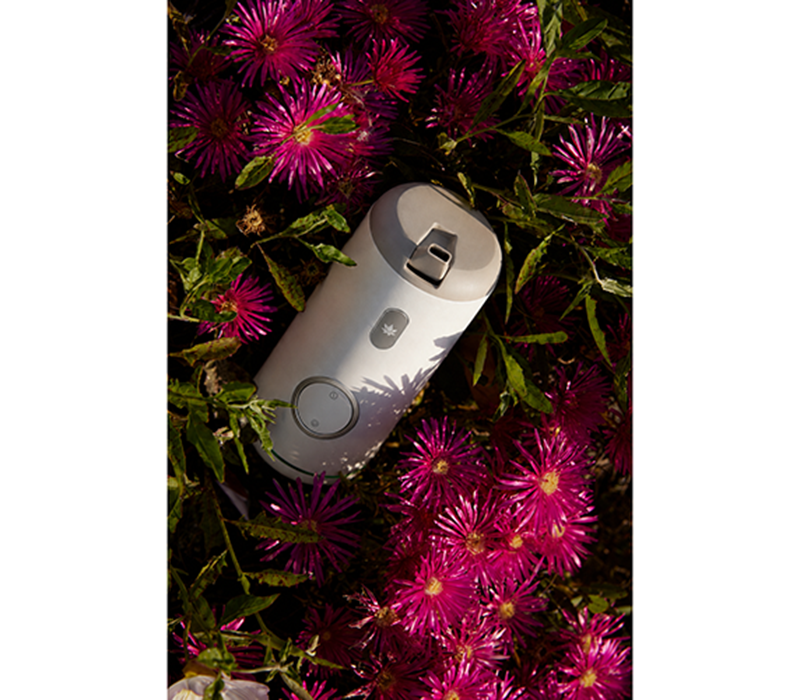
Image Courtesy of Spark Perceptions Technology
Vapes solved convenience. They also changed the product.
The vape category deserves credit. It proved cannabis consumers will embrace technology when technology removes friction.
But a cartridge is not simply a more convenient bud.
It involves extraction, formulation, oil, hardware, heating components and another layer of manufacturing and testing between the plant and the consumer.
Recent regulatory challenges are a reminder that those layers matter. Michigan regulators recalled thousands of cannabis vape cartridges in 2025 after testing found MCT oil, while California has continued issuing vape recalls involving pesticide contamination.
None of that means vaping is inherently bad.
And none of it makes combustion risk-free. Smoke is smoke.
It means the two experiences solve different problems.
For the consumer who wants discretion and portability, a cartridge can make perfect sense.
For the person who bought a beautiful eighth because they care about the flower itself, turning that flower into oil is not necessarily an upgrade.
Sometimes they just want a better way to smoke the flower.
So automate the annoying parts
This is where EZ-UP Aurora gets interesting.
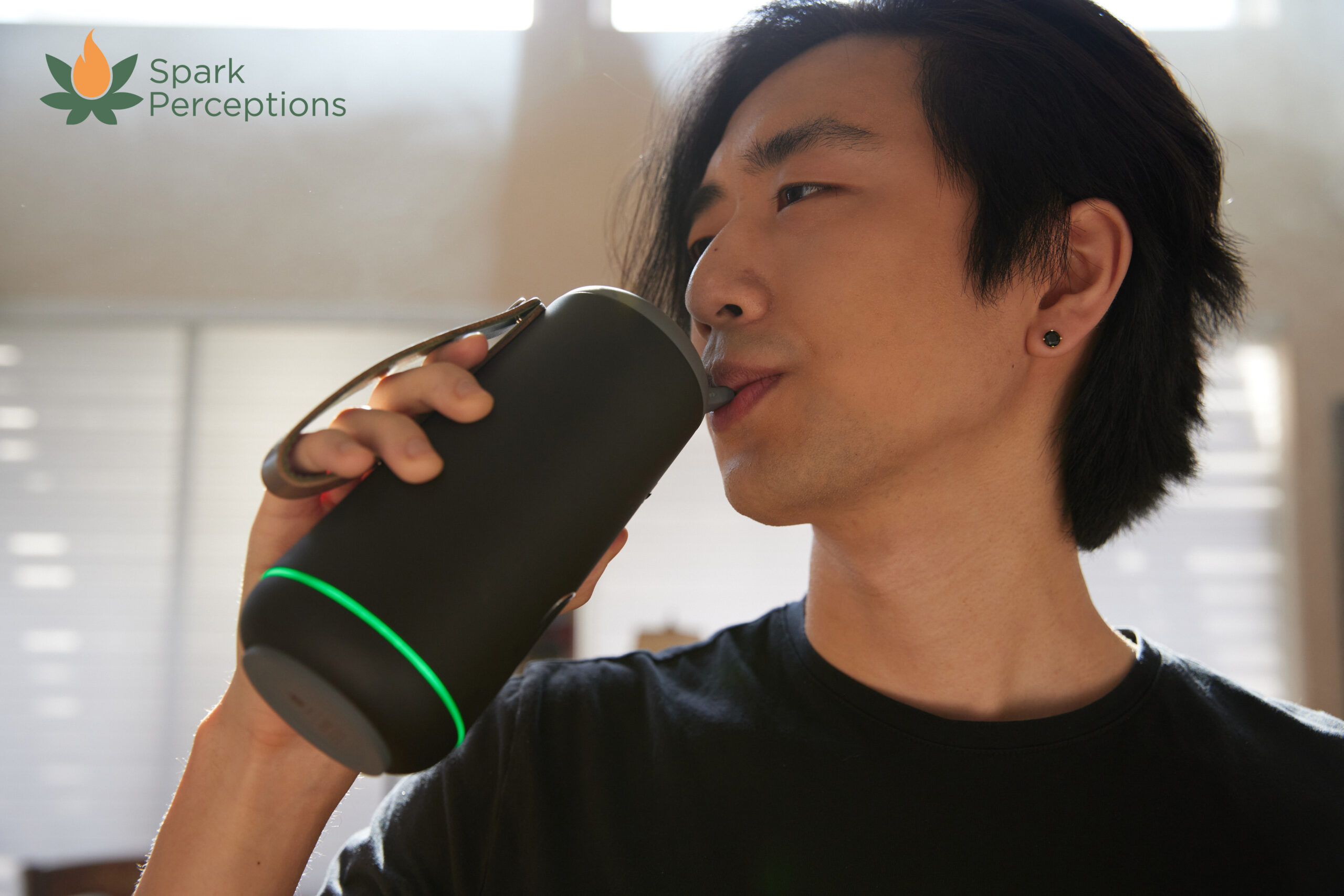
Spark Perceptions has been developing Aurora as a fully automated dry herb combustion device built around automatic portion feeding, controlled combustion, airflow management and ash collection.
The idea is simple.
Load prepared flower into the device. Instead of packing another bowl every few hits, Aurora feeds smaller portions into the combustion area as the session continues. Spent material moves out of the active chamber, and ash is collected separately.
The smoker still chooses the flower.
The flower still combusts.
The aroma, taste and character of the material are still part of the session.
What changes is all the repetitive stuff around it.
No constant packing. Less relighting. Less knocking out bowls. Less watching good flowers sit there burning because everyone gets distracted.
In search terms, Aurora fits naturally into a new set of behaviors people are already looking for: automated dry herb device, self-feeding dry herb device, combustion dry herb device and, for smokers who never really fell in love with vapor, a very different kind of dry herb vaporizer alternative.
In real-life terms, it is easier to explain:
Keep the flower. Let the machine handle the chores.
There is a business case for protecting good flowers
This gets more interesting when the flower gets expensive.
Nobody feels great watching mediocre weed burn away in an ashtray.
Watching a $50 or $60 eighth do it hurts more.
Joints keep burning between hits. Bowls smolder. People overpack because they do not want to reload. A session gets interrupted, and a portion of what the customer paid for never really becomes part of the experience.
Aurora’s portion-based architecture is intended to reduce that unnecessary burn by putting smaller amounts of flower into active combustion when they are needed.
Spark Perceptions is currently validating the real-world material-efficiency impact rather than attaching a big savings number before the data is ready.
But the retail logic does not require a marketing claim.
If a customer feels they are getting more intentional use out of each gram, spending more on the gram starts to make more sense.
That is the shift from price per gram to value per gram.
For a premium cultivator, that is a useful idea.
You spent all that time making better flower. The hardware at the end of the chain should not be the least sophisticated part of the process.
For a retailer, it creates a different kind of upsell. The conversation is no longer simply, “Buy this expensive piece of hardware.”
It can become:
You already care enough about flower to buy the good stuff. This hardware just gives you a better way to enjoy it.
And yes, it still has to sell
Cannabis has seen plenty of cool hardware that looked great at a booth and collected dust at retail.
Nobody needs another one.
A genuinely new category has to prove itself at the counter.
Will a budtender understand Aurora quickly enough to brag it?
Will seeing the automatic feeding and combustion process make a shopper stop and ask questions?
Will premium flower customers see $549 hardware as a meaningful upgrade rather than another gadget?
Will the first stores reorder?
Those are the numbers that matter.
Spark Perceptions is now preparing Aurora for its first commercial production run targeted for October 2026 and has begun early discussions with distributors, premium retailers and cultivation partners. Demo units are part of that rollout because this is one of those products that makes a lot more sense after watching it work than after reading a spec sheet.
The first production run will answer plenty of questions.
But the larger market question has been sitting in plain sight for years.
Cannabis technology made dabbing easier.
It made vaping easier.
It made dosing easier.
All that time, millions of people kept grinding flower, packing bowls and lighting joints.
Maybe that is not resistance to innovation.
Maybe flower lovers were simply waiting for technology that did not ask them to stop loving flower.
Watch EZ-UP Aurora @ MJBiz Con here
More info: www.sparkperceptions.com