Every year, cannabis operators lose product, face regulatory action, or pay out-of-pocket to replace noncompliant packaging not because they didn’t care about compliance, but because they didn’t know the rules had changed.
Packaging compliance is one of the most complex, state-specific, and frequently updated requirements in the cannabis industry. What’s legal in California may violate Michigan rules. What Colorado required in 2023 has been amended for 2027. And the federal standards that underpin most state programs are themselves subject to revision.
This guide breaks it all down: what the core compliance requirements are, where states diverge, and what to look for when sourcing packaging to stay on the right side of regulators.
The Federal Floor: CPSC Child-Resistant Standards
All cannabis packaging compliance starts with the Consumer Product Safety Commission (CPSC) and the Poison Prevention Packaging Act (PPPA). Every state with a legal cannabis program, medical or adult-use, has incorporated child-resistant (CR) packaging requirements that reference or align with CPSC testing protocols.[1][2]

To be considered compliant child-resistant under CPSC standards, packaging must pass two tests:
- Child-resistant test: At least 85% of a test panel of children under 5 must fail to open the package within a defined time limit (typically 5 minutes with demonstration, 10 minutes without)[2]
- Adult-use test: At least 90% of adults must successfully open the package[2]
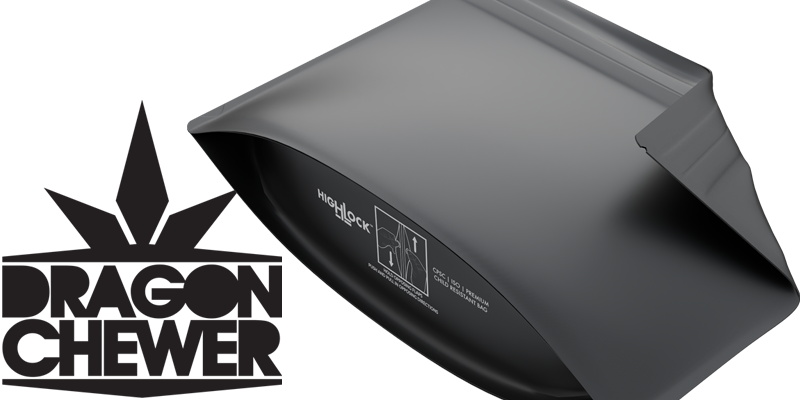
In practice, this means the packaging material matters as much as the container design. Thin mylar bags that a toddler can tear open don’t pass. Resealable bags with a certified HIGHLOCK zipper system do. When sourcing packaging, look for suppliers who can provide documentation of third-party CPSC/ASTM testing, not just claims.[3]
What States Are Actually Requiring in 2027
The compliance picture is nuanced because states layer additional requirements on top of the federal CR baseline. Here’s where the key markets stand:
California: DCC regulations require child-resistant packaging for all cannabis products sold to consumers. Delivery operators face the same requirements as storefronts. All packaging must include a universal symbol, warning statements in 6-point minimum font, and — for edibles — a statement that the product contains THC. Resealable CR packaging is required if the product contains multiple servings.[4]
Colorado: MED rules require opaque, child-resistant, and resealable packaging for most cannabis products. Colorado has some of the strictest labeling requirements in the country, including required font sizes, warning text, and for concentrate products specific tamper-evident seals. Multi-serving containers must remain child-resistant after each opening.[5]
Michigan: CRA regulations require CR packaging meeting ASTM D3475 or equivalent standards. Michigan distinguishes between single-serving (CR at point of sale) and multi-serving (must remain CR through final use). Labels must include batch numbers, test results, and a warning advisory.[6]
Illinois: IDFPR requires child-resistant and opaque packaging for all cannabis products. Illinois has specific provisions for social equity operators that streamline some labeling requirements during initial licensing periods. Exit packaging must also be child-resistant.[7]
Oklahoma: OMMA requires all medical marijuana products in child-resistant packaging. Oklahoma mandates that packaging include the patient/caregiver license number for medical sales, making traceability a key packaging consideration.[8]
Nevada: CCB regulations require resealable, child-resistant, and opaque packaging. Nevada has additional requirements for cannabis lounges, including specific labeling for on-site consumption products.[9]
New York: OCM adult-use regulations require opaque, child-resistant packaging with a universal symbol, excise tax sticker placement, and product origin labeling. New York is phasing in additional sustainability requirements through 2027, with preference for recyclable or compostable packaging where CR standards can be maintained.[10]
Washington: LCB requires child-resistant packaging for all cannabis products, with some of the most specific labeling requirements around health warnings required placement, font size, and specific text mandated by rule.[11]
The Most Common Compliance Failures (and How to Avoid Them)
- CR certification gaps – Using packaging that “looks” child-resistant but lacks third-party testing documentation. Always request CPSC/ASTM test reports from your supplier.[2][3]
- Post-opening CR failure – Multi-serving products in packaging that stops being child-resistant after the first open. Look for resealable closures (HIGHLOCK zipper systems) that maintain CR performance through multiple uses or HIGHLOCK Pop Top containers and tubes.[4]
- Label placement conflicts – Required warning language covered by applied labels, or barcodes overlapping required text. Design your label and packaging system together, not separately.
- Wrong opaqueness level – Some states require fully opaque; others allow tinted transparent. Know your state’s standard before ordering.
- Missing state-specific additions – Batch numbers, QR codes for COAs, excise tax placement, universal symbols. Every state has its own checklist.
What to Look for in a Packaging Supplier
Compliance starts with your supplier. When evaluating packaging vendors, ask for:
- Testing documentation: Third-party CPSC/ASTM certification, not just a product listing checkbox
- Made-in-USA options: Domestic manufacturing means faster lead times and easier documentation for state regulators
- State compliance support: Does your vendor know the difference between California’s and Michigan’s requirements?
- Custom printing: Operators scaling across markets benefit from packaging that incorporates compliance elements from the start avoiding the cost and error rate of applied sticker labels
Dragon Chewer (dragonchewer.com) supplies wholesale cannabis and mushroom packaging to dispensaries, brands, cultivators, and processors across the United States with pricing starting at $0.04 per unit, free shipping on qualifying orders, and no tariffs or hidden fees. Their line includes CPSC-certified child-resistant HIGHLOCK resealable bags, HIGHLOCK pop-top flower bottles, pre-roll tubes, glass jars, and compliance labels plus custom-printed packaging for operators who want to embed compliance into their brand from the start.
Request a free sample pack at dragonchewer.com/pages/sample-pack, or reach the wholesale team at sales@dragonchewer.com.