
Want the full data? Read the full lab results.
KEY RESULTS
- 2.6% RSD: distillate per gram of flower across six drum positions
- ±5%: every position within 5% of the batch average (range 97.6–104.7)
- Pass: meets pharmaceutical blend-uniformity criteria on two independent cross-checks
The consistency problem in infused pre-rolls
For cannabis processors making infused pre-rolls and infused flower, potency consistency is the product. Every unit is sold on one labeled potency. When distillate isn’t spread evenly during infusion, the same drum can turn out hot and cold units, leading to label claims that miss on retest and an inconsistent experience for consumers.
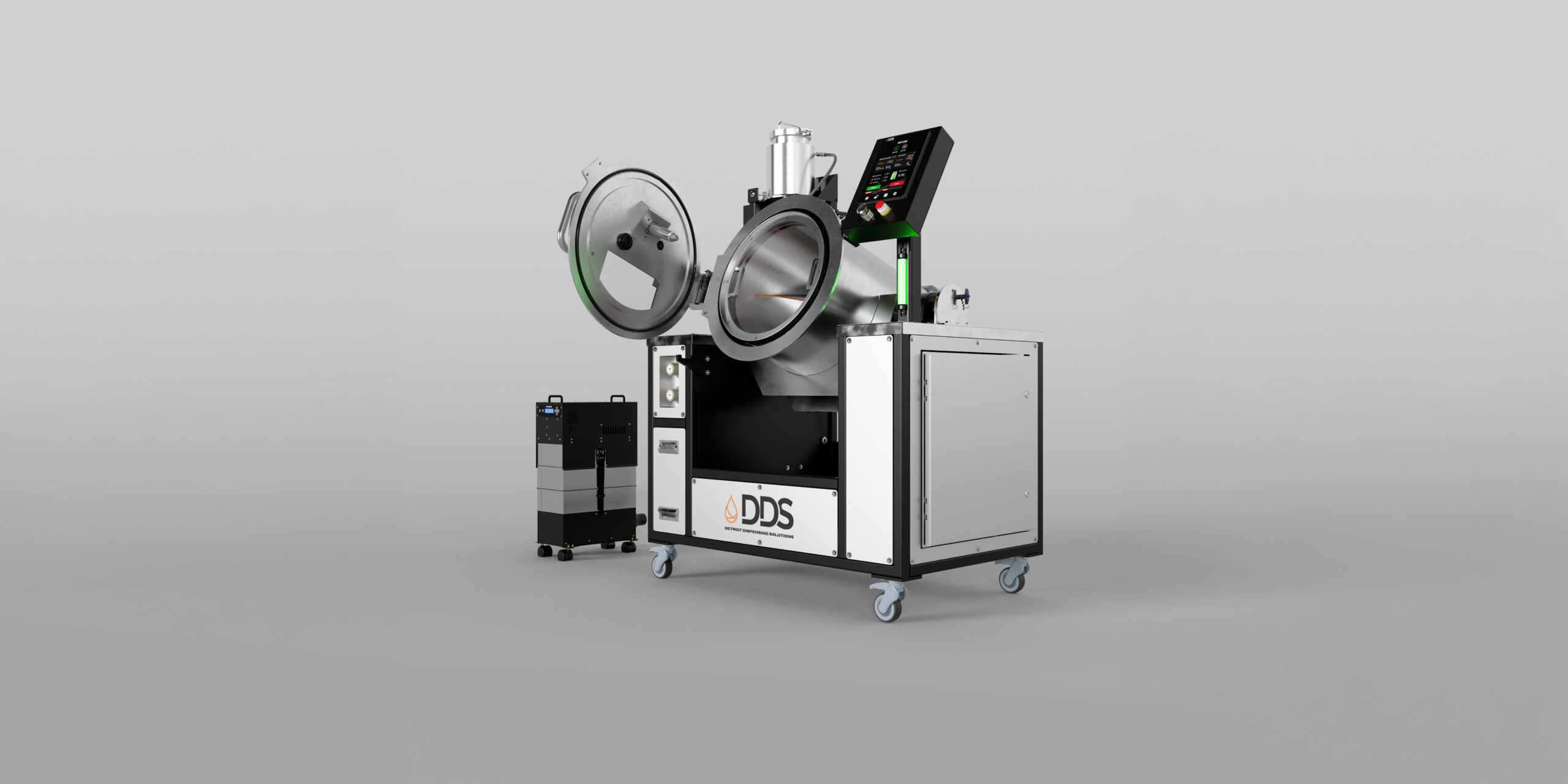
Detroit Dispensing Solutions set out to measure how evenly its FX-8 Flower Infusion Machine distributes distillate, using a real commercial production run.

How the test worked
After one production batch at a licensed Michigan processor, six samples were pulled from different spots in the drum: top and bottom, at the front, middle and back. All six went to PuEr Lab, an independent, state-licensed testing lab in Warren, Michigan, for standard HPLC cannabis potency testing.
To measure the infusion itself, rather than natural differences in the flower, the analysis uses simple chemistry. Distillate carries activated THC (?9-THC) and essentially no THCa, while raw flower carries mostly THCa. Comparing the two in each sample shows how much distillate that sample’s flower received. A second flower-only cannabinoid, CBGa, served as an independent cross-check.
The results
Every drum position landed within ±5% of the batch average, and overall variation was 2.6% RSD (relative standard deviation, a standard measure of spread where lower means more consistent).
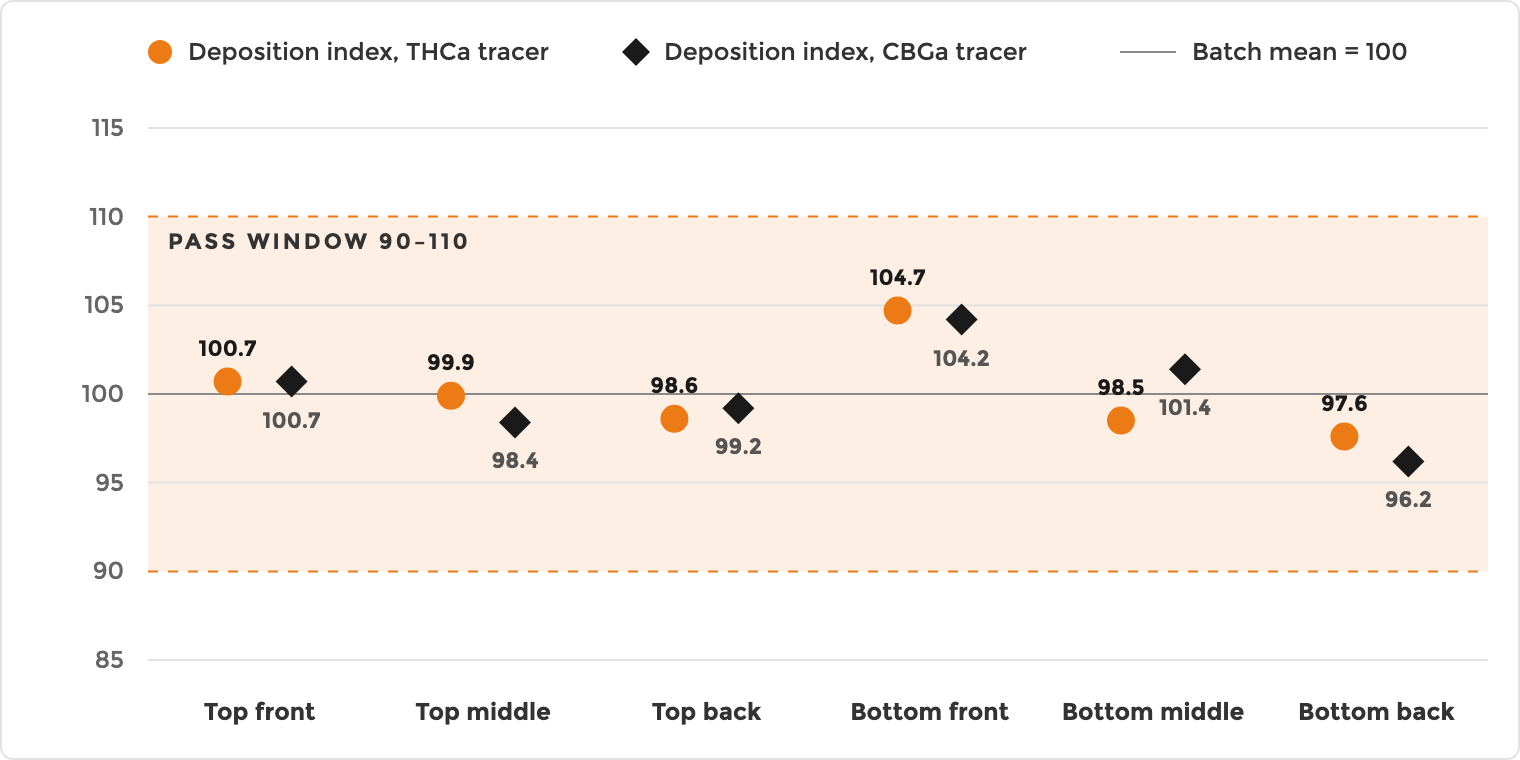
How much distillate the flower at each drum position received, compared with the batch average (100). Both cross-checks agree: every position sits inside the 90–110 pass window. Image courtesy of Detroit Dispensing Solutions
For context, drug manufacturers use a similar test to confirm a powder blend is evenly mixed before it’s pressed into tablets or filled into capsules: variation of 5.0% RSD or less, with every sample within 90–110% of the average. The FX-8 batch passed those same criteria on both cross-checks.
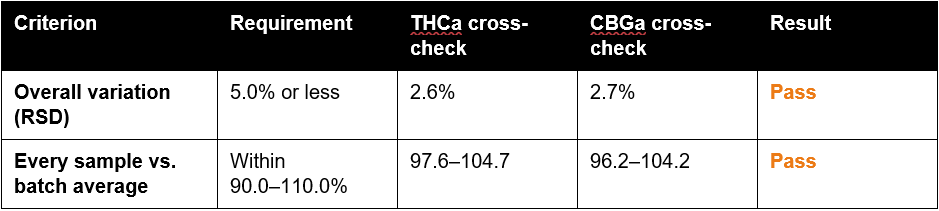
The 2.6% figure also sits close to the margin of error of a single lab potency test, roughly 2–3% RSD. In other words, the machine is at least as uniform as the lab can resolve.
What this means for processors
For operators evaluating cannabis infusion equipment, the takeaway is straightforward: distillate loaded into the FX-8 drum was distributed evenly through it, front to back and top to bottom, as measured by an independent, state-licensed lab.
The FX-8 infuses bulk flower before it is rolled, up to 8 lb of ground flower per 5-minute cycle, so every pre-roll is filled with flower that is already infused.
This was a field test on one commercial batch, and results relate to the batch tested.
See the full methodology, sampling plan and position-by-position data: read the full FX-8 lab results.
More info: www.detroitdispensingsolutions.com